NEW DELHI, Oct. 11, 2026 /debcubspark.com-DigiTIMES./ — Strategic autonomy does not require India to choose between engagement and independence. Its real test lies in retaining the freedom to decide whom to work with, on what issues and on what terms. This freedom is increasingly being tested as trade, technology, energy, and security become instruments of geopolitical pressure.
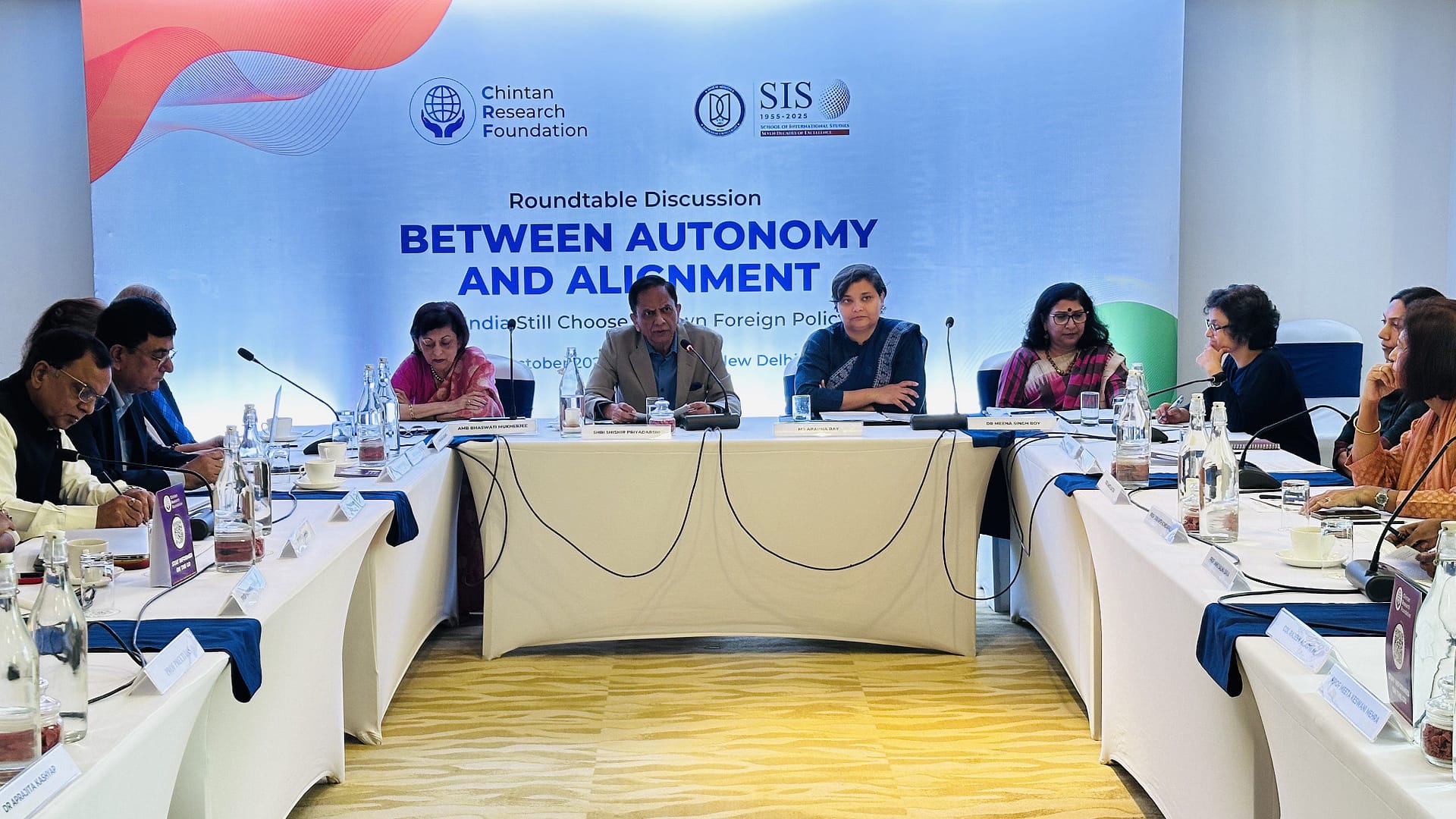
These were among the key themes discussed at a Roundtable Discussion jointly organised by the Chintan Research Foundation (CRF) and the School of International Studies (SIS), Jawaharlal Nehru University (JNU), on 14 October 2026, at The Grand, New Delhi. Titled “Between Autonomy and Alignment: Can India Still Choose Its Own Foreign Policy?”, the roundtable brought together distinguished diplomats, academics and strategic affairs experts to examine the challenges facing India’s strategic autonomy and how its diplomatic engagements can be translated into greater strategic leverage.
In his welcome remarks, Shri Shishir Priyadarshi, President, CRF, highlighted the growing difficulty of pursuing an independent foreign policy amid intensifying major-power rivalries and the increasing weaponisation of economic and strategic dependencies. He emphasised that strategic autonomy does not imply isolation, neutrality or disengagement, but the freedom to make independent judgements based on national interests. Its success, he noted, should be measured not merely by the number of India’s international partnerships, but by how effectively these relationships expand its choices in technology, investment, markets, energy security and defence.
Delivering the keynote address, Ms Aparna Ray, Joint Secretary (CCCS), Ministry of External Affairs, challenged the conventional distinction between autonomy and alignment, arguing that the ability to choose partners and areas of cooperation is itself central to strategic autonomy. She highlighted how the changing international order has created opportunities for flexible, issue-based partnerships, even as economic instruments are increasingly being weaponised. On China, she stressed the need to develop independent assessments rooted in India’s own understanding rather than relying on external interpretations. She also called for stronger engagement between government, academia and industry, and the development of an Indian normative vision of the international order.
The first session, “Strategic Autonomy Under Pressure: Can India Still Choose Its Own Path?”, examined the changing meaning of strategic autonomy and its relationship with India’s tradition of independent foreign policymaking. Speakers discussed the implications of US–China competition, India’s relations with major powers and the pressures arising from regional security challenges. The discussion also explored whether multi-alignment remains an appropriate description of India’s foreign policy or whether strategic multi-engagement better captures its approach. Economic interdependence, critical minerals, emerging technologies and India’s engagement with the Global South featured prominently. Speakers also emphasised the importance of developing independent perspectives on international politics and strengthening regional partnerships while preserving diplomatic flexibility.
The second session, “From Multi-Alignment to Strategic Leverage: What Does India Need to Do Next?”, focused on translating India’s diplomatic partnerships into tangible strategic capabilities. Speakers stressed that strategic leverage must be supported by economic strength, manufacturing capacity, technological advancement, energy resilience and indigenous defence capabilities. Speakers discussed greater coordination through issue-based partnerships, diversified supply chains, and minilateral arrangements as a way to strengthen India’s negotiating position. India’s capabilities in pharmaceuticals, information technology and digital public infrastructure were highlighted as important strengths. The discussion also explored opportunities for developing a Global South framework for artificial intelligence, strengthening regional connectivity and expanding economic partnerships. Speakers further noted that strategic autonomy is not a fixed position, but an ongoing dynamic effort to build national capabilities and exercise independent choices in a changing international environment.
In her concluding remarks, Dr Aprajita Kashyap, Associate Professor, Centre for the Study of the Americas, JNU, highlighted the importance of moving from reacting to the international order towards actively shaping it through independent and carefully chosen engagements. She underlined the need to strengthen India’s economic, technological and defence capabilities while converting diplomatic partnerships into meaningful strategic advantages. Acknowledging the diversity of perspectives expressed during the roundtable, she emphasised the value of continued dialogue in developing substantive approaches to India’s foreign policy challenges.
Overall, the discussion underscored that India’s strategic autonomy rests not simply on maintaining diverse partnerships, but on strengthening the national capabilities needed to translate diplomatic flexibility into lasting strategic leverage.