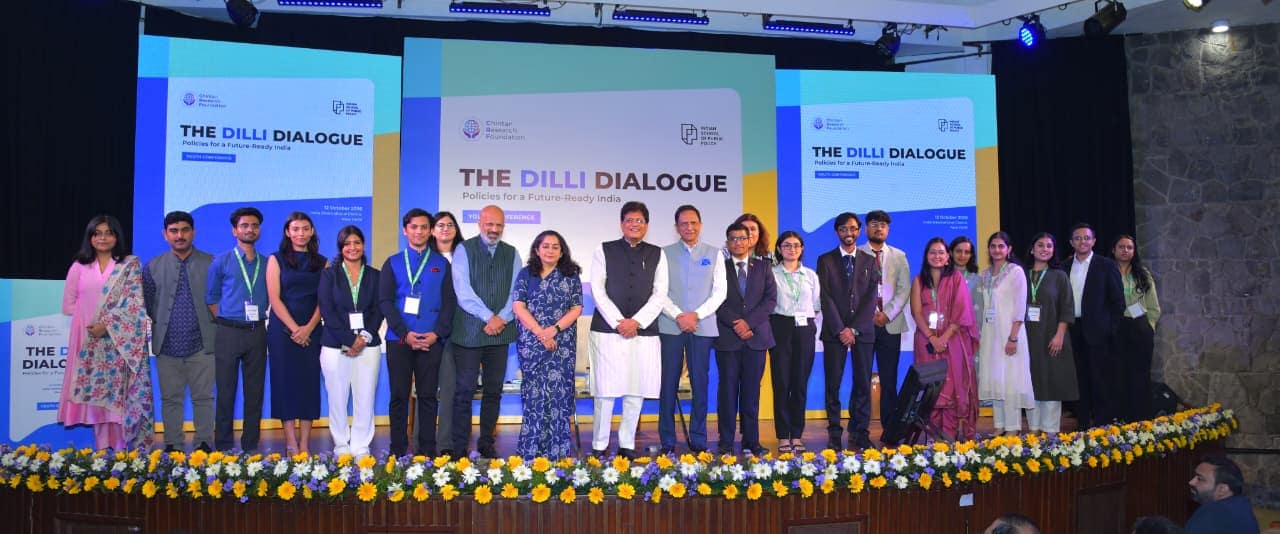
NEW DELHI, Oct. 12, 2026 /debcubspark.com-DigiTIMES./ — Indian School of Public Policy (ISPP) and Chintan Research Foundation (CRF) convened The Dilli Dialogue: Policies for a Future-Ready India on 11–12 October 2026, bringing together policymakers and experts to examine key priorities in India’s development agenda.
Mr Piyush Goyal, Hon’ble Minister of Commerce and Industry, Government of India, participated in a fireside chat with Mr Luis Miranda, Chairperson and Co-Founder, Indian School of Public Policy (ISPP), and Mr Shishir Priyadarshi, President, Chintan Research Foundation (CRF). He emphasised the need to adopt new-age technologies to enhance India’s productivity and global competitiveness, while equipping young people with the skills to use them effectively. He highlighted India’s ambition to become a developed nation by 2047 under the Viksit Bharat vision, setting a $1 trillion export target and expanding access to global markets through free trade agreements. He also stressed the importance of strengthening domestic capabilities and upholding world-class quality standards, while remaining open to global trade and investment.
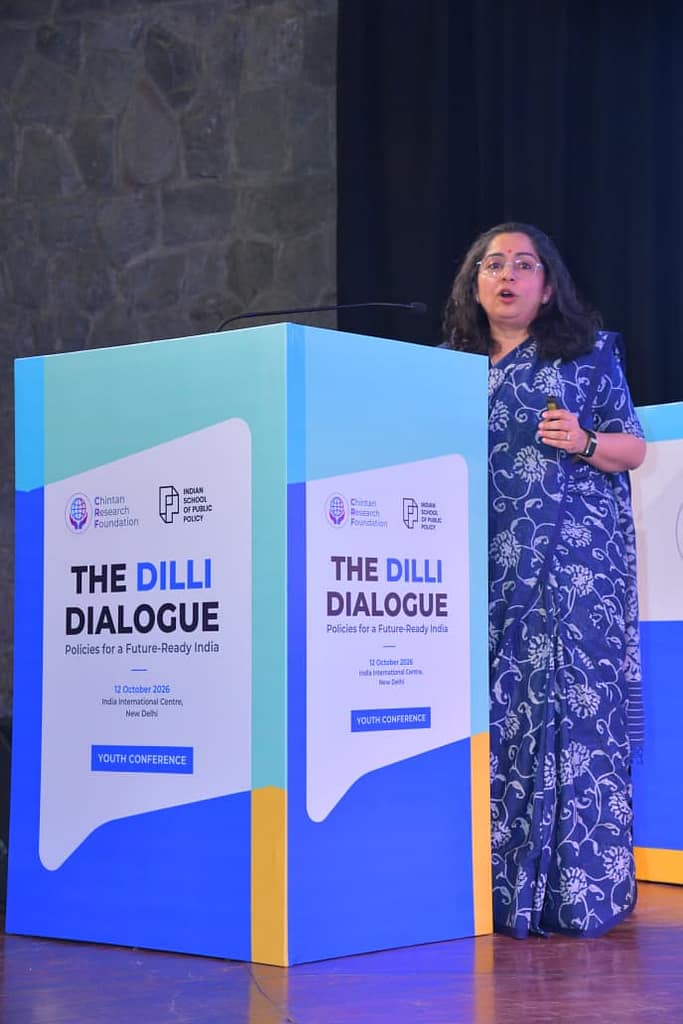
Delivering the special address, Dr Shamika Ravi, Member, Economic Advisory Council to the Prime Minister; Secretary to Government of India, highlighted India’s development progress through improvements in living standards and health outcomes, while emphasising the need to look beyond conventional macroeconomic indicators. Drawing on consumption expenditure and other publicly available data, she noted a decline in poverty and inequality, alongside improvements in maternal and infant mortality. Concluding with the concept of narrative economics, she discussed how the data on global media coverage can reveal how countries are portrayed internationally, stressing that while data is not absolute truth, it offers a more objective basis for assessing developments than anecdotes alone.
“India’s development progress through improvements in living standards and health outcomes, while emphasising the need to look beyond conventional macroeconomic indicators.”
Dr Shamika Ravi, Member of the Economic Advisory Council to the Prime Minister and Secretary to the Government of India
Earlier, in the inaugural address, Dr Guriqbal Jaiya, Chairperson, Vidya Vichari Trust, highlighted the need for a holistic and inclusive approach to policymaking, taking into account diverse perspectives and the needs of the poorest.
The conference also featured four policy consultation panels addressing key dimensions of India’s development agenda. The panel on Economy and Trade explored how digitalisation and artificial intelligence can strengthen industrial productivity and trade competitiveness. The discussion on Urbanisation examined the role of smaller cities in driving economic growth. The panel on Climate Change and Energy Transition focused on building resilient energy infrastructure amid extreme weather events, while the session on Health explored ways to improve equitable access to essential medicines and diagnostics, particularly across urban and rural areas.
The pre-conference Youth Workshop, held on 11 October 2026 at the Indian School of Public Policy (ISPP), brought together young participants for interactive sessions on education, urban mobility and climate action. Delivering the Chief Guest Address, Mr Viren Rasquinha, Managing Director and CEO, Olympic Gold Quest (OGQ), highlighted the role of sports in building resilience, teamwork and confidence, and stressed the need for stronger grassroots sports infrastructure and greater integration of sports into school education. Mr Deepak Bagla, Mission Director, Atal Innovation Mission, NITI Aayog, also addressed the session, highlighting the growing breadth of innovation across India, including in smaller towns and rural communities. The workshop featured sessions by the Centre for Civil Society (CCS), Young Leaders for Active Citizenship (YLAC) and Civic Studios.