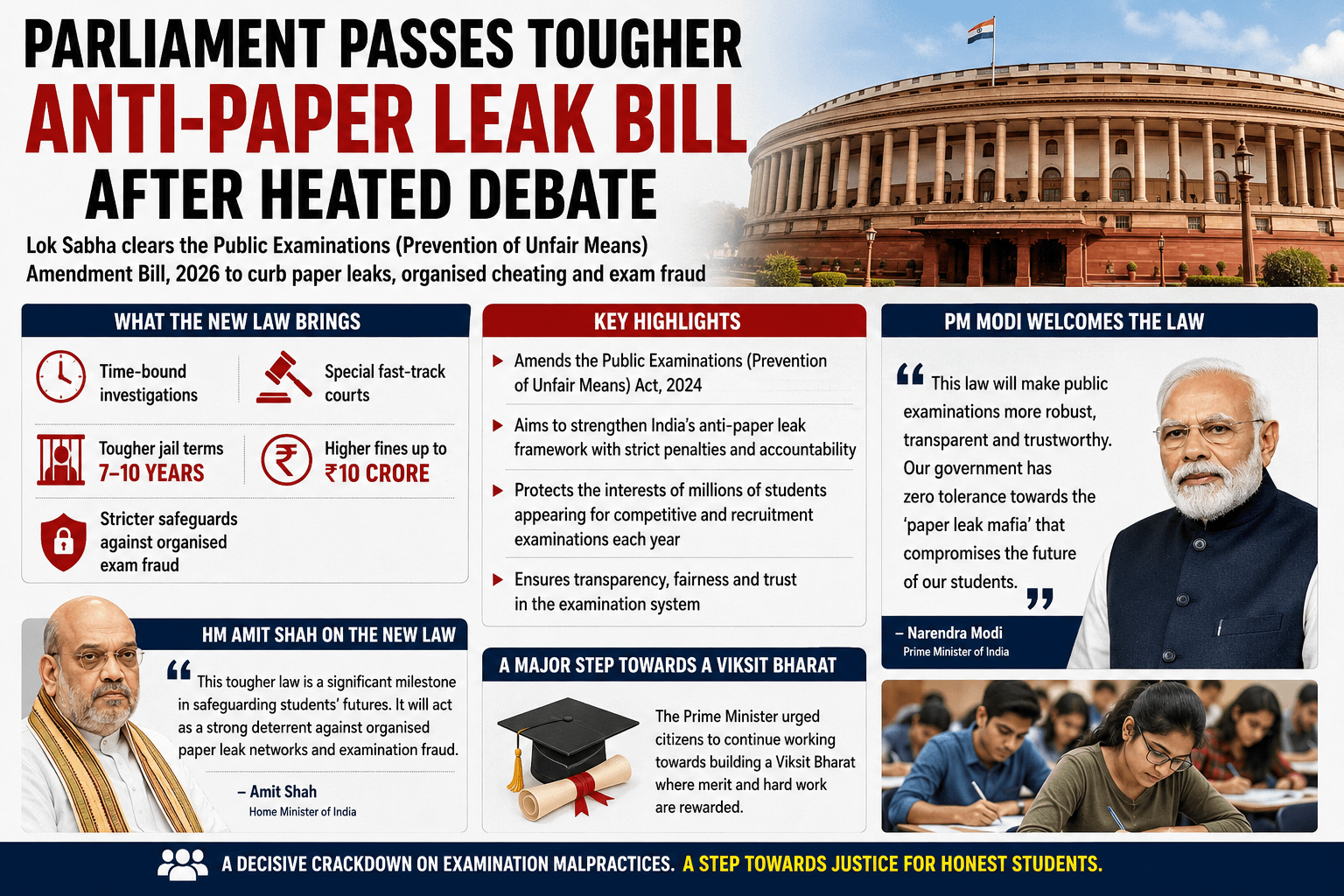
Parliament Passes Tougher Anti-Paper Leak Bill After Heated Debate
According to the Prime Minister, the amended law would make public examinations more robust, transparent and trustworthy. He added that the government would show zero tolerance towards the “paper leak mafia” that compromises the future of students
The Invisible Builders of Viksit Bharat: The Communities Restoring India’s Coasts—and Its Future
The vision of Viksit Bharat 2047 calls for development that is economically strong, environmentally resilient and socially inclusive. The experiences emerging from India’s coastline show how local communities can contribute to this vision
TERI Launches ‘Future-In-Charge’ Phase 2 in Bengaluru to Power India’s EV Charging Workforce
Government mission is 30% of total vehicles shall be EV by 2030. Efforts are made through PM E-drive scheme, State policies, and Charging Infrastructure Investments. The target is to prepare India’s workforce to build, operate, and maintain the charging infrastructure that will power the nation’s clean mobility transition in support of India’s Net Zero Mission
Himachal CM Calls for Climate-Proof Infrastructure as Experts Push Resilient Planning for Western Himalayas
Dr. Debajit Palit, Centre Head of the Centre for Climate Change and Energy Transition at CRF, said climate change in the Himalayas has evolved beyond an environmental issue into a development challenge with significant implications for public investment and long-term economic resilience
TERI Urges National Push for Solar Thermal Technologies to Accelerate Industrial Decarbonisation
“India’s net-zero transition depends on empowering SMEs to overcome financial and technological barriers through affordable capital, proven pilot projects, and market-driven ESG incentives for clean process heat.”
Reliable, Consumer-Centric Quality Power Supply Key to Bridging Rural-Urban Divide in Uttar Pradesh: Experts
“While previous reforms had substantially expanded electricity access through increased generation capacity and nationwide electrification, reliability and quality of supply—particularly in rural areas—continue to remain major concerns.”
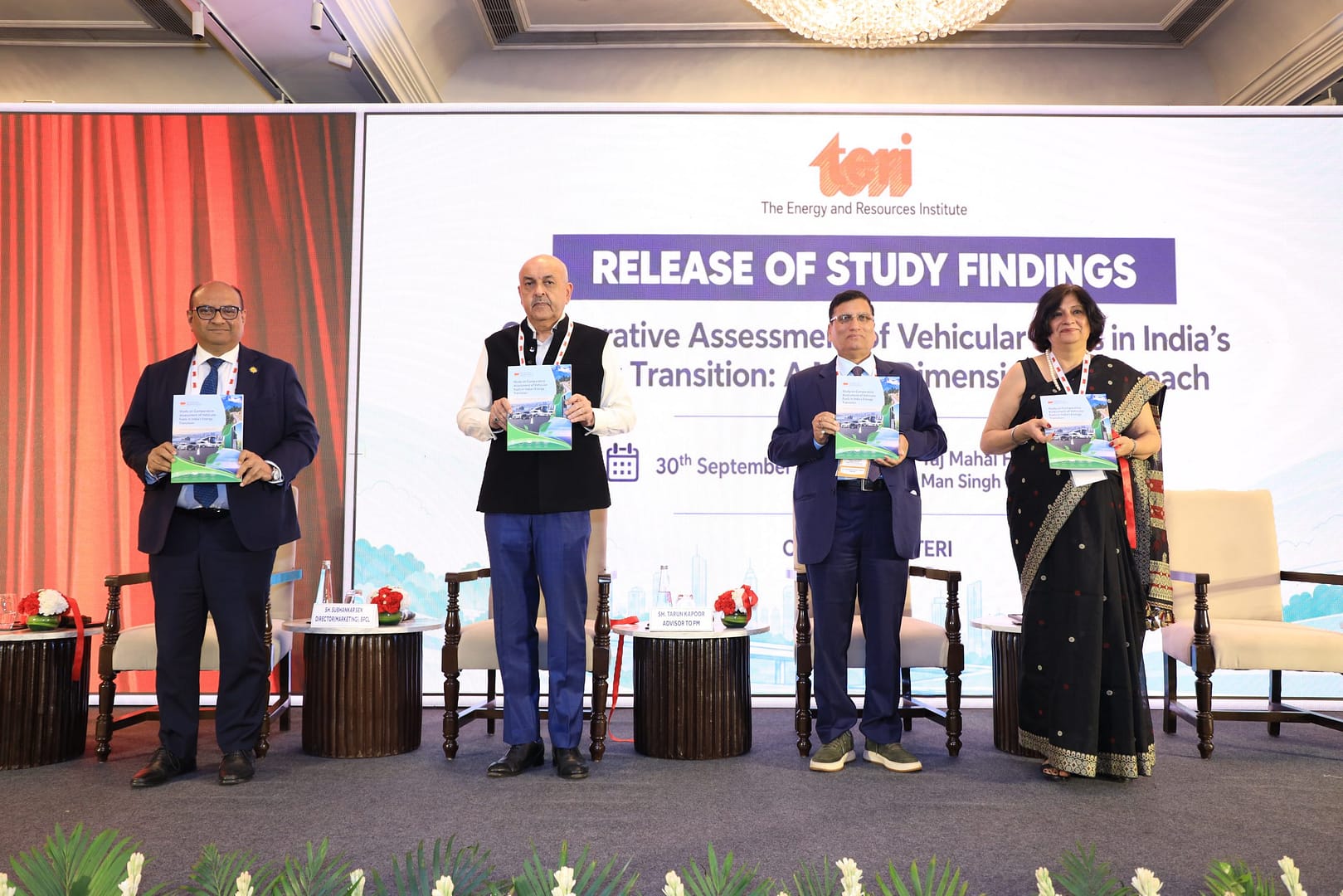
Delhi Gets Nearly 16,900 Interstate Trucks Daily; Freight Emissions Major Contributor to PM2.5, Landmark Study Finds
Delhi receives an average of 16,900 heavy-duty vehicles (HDVs) every day, amounting to nearly half a million truck entries each month. While freight vehicles represent only a fraction of total vehicular traffic, they contribute disproportionately to harmful emissions because of their diesel-heavy fleet composition, larger engines and extensive night-time operations
TERI, A-PAG and IIT Delhi to Launch Landmark Study on Interstate Truck Emissions in Delhi
The report presents one of the most comprehensive assessments of interstate truck emissions in Delhi, drawing upon official RFID (Radio Frequency Identification) toll data, traffic counts, driver surveys, and real-world tailpipe emissions measurements using an indigenously developed Portable Emissions Monitoring System (PEMS)
Financing India’s EV Transition: Experts Discuss Infrastructure, Capital and Policy Priorities
Mr. Alok Kumar, Director General, All India Discoms Association (AIDA) and former Secretary, Ministry of Power, Government of India, in his keynote address, posited India’s energy transition journey, primarily through the twin lenses of affordability and green growth, with emissions reduction emerging as an important co-benefit