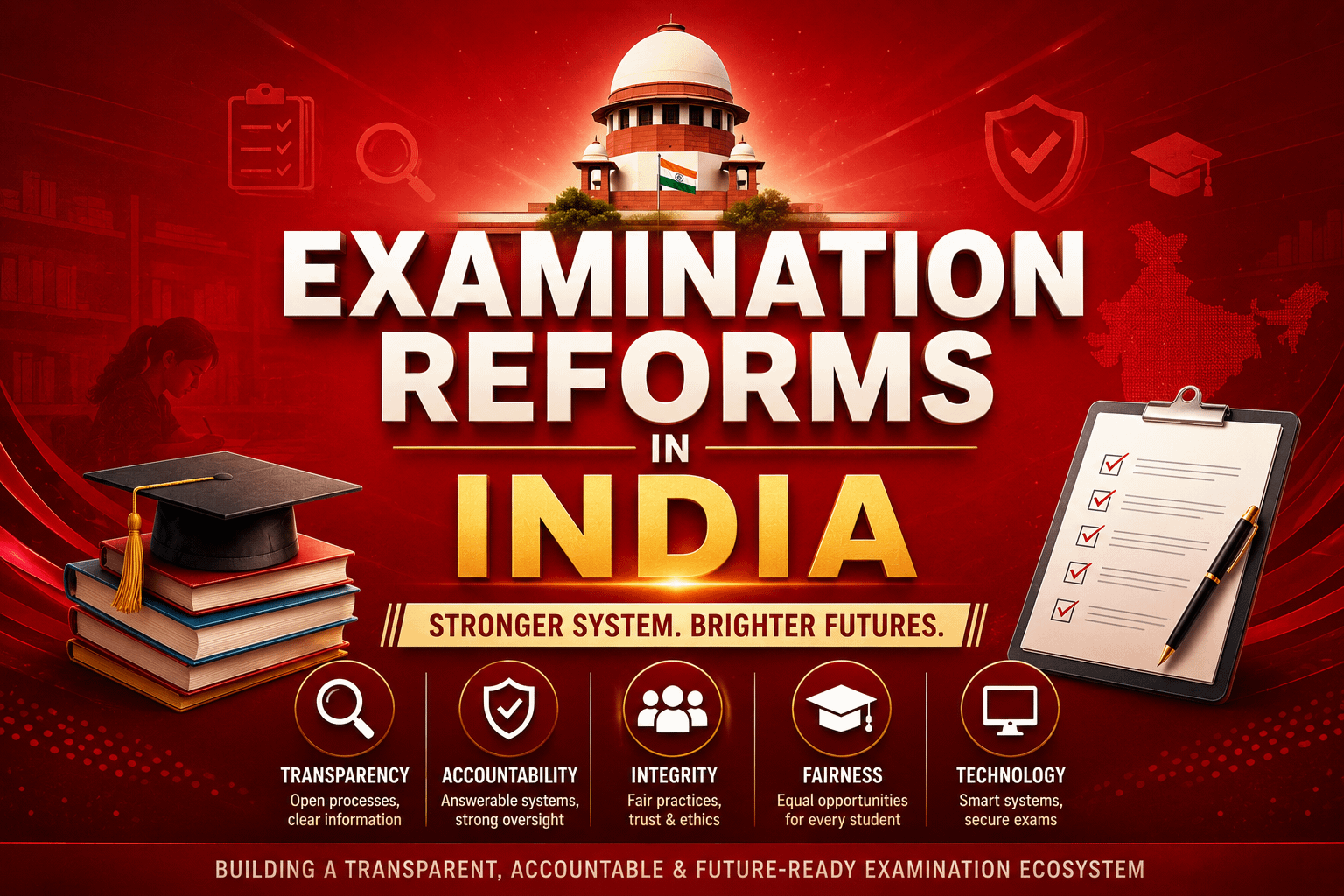



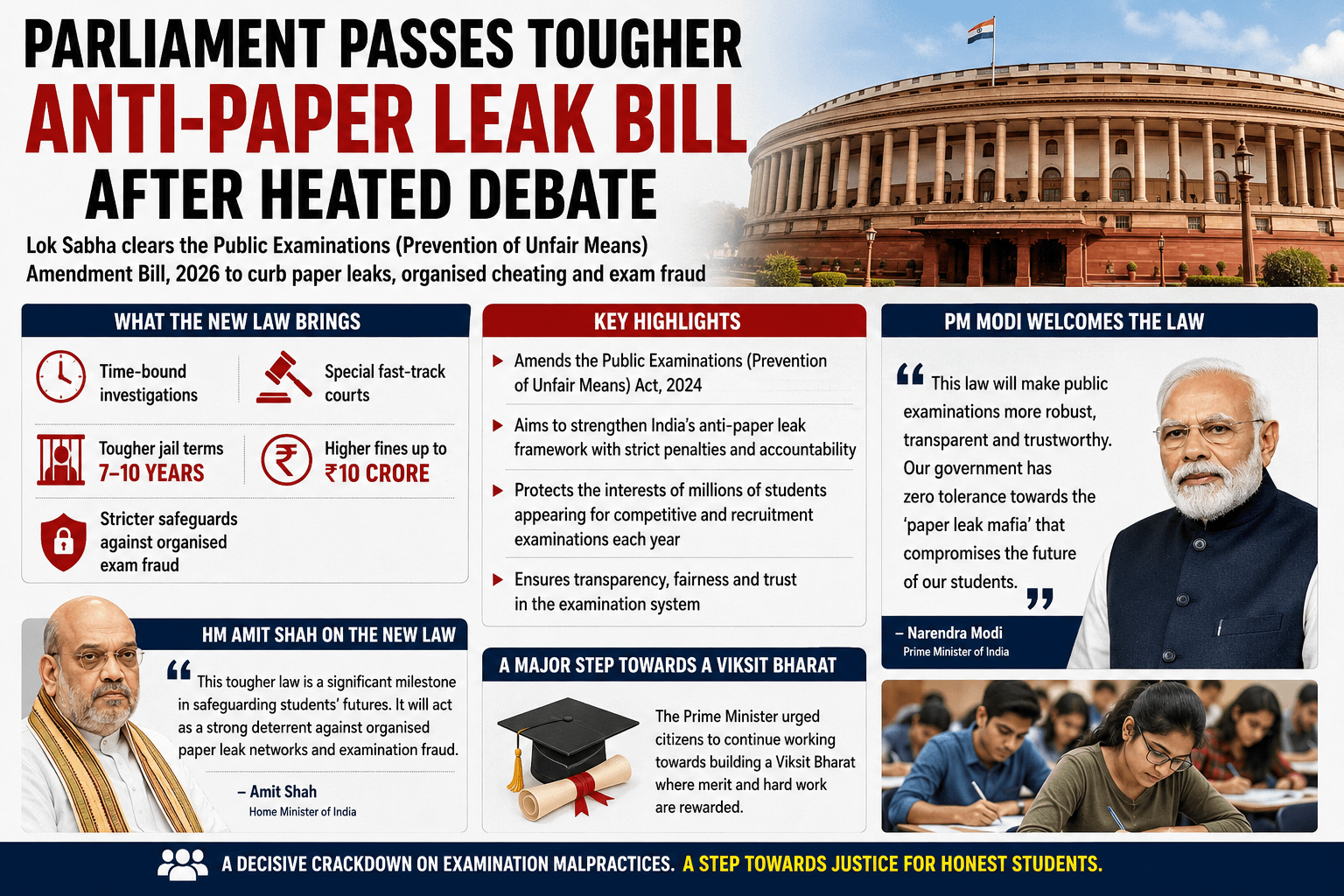
The Lower House on July 29, 2026 passed the Public Examinations (Prevention of Unfair Means) Amendment Bill, 2026 by voice vote with a view to strengthening India’s anti-cheating law with time-bound investigations, special fast-track courts, tougher jail terms and higher fines to curb examination paper leaks, organised cheating and exam fraud.
Cleared by the Lok Sabha earlier and taken up by the Rajya Sabha for consideration on July 30, 2026, the new legislation amends the Public Examinations (Prevention of Unfair Means) Act, 2024. The amended law aims at strengthening India’s anti-paper leak framework by imposing tougher penalties of 7-10 years in jail and maximum fines of up to Rs. 10 crore, enabling fast-track investigations and trials and introducing stricter safeguards against organized examination fraud.
Taking to micro-blogging site X, Prime Minister Narendra Modi welcomed the legislation and highlighted it as a major step towards transparency in exams and restoring trust in India’s examination system.
According to the Prime Minister, the amended law would make public examinations more robust, transparent and trustworthy. He added that the government would show zero tolerance towards the “paper leak mafia” that compromises the future of students.
Earlier, NEET-UG 2026 paper leak controversy has led to the cancellation of exams resulting in nationwide protests and eventual passage of the Public Examinations (Prevention of Unfair Means) Amendment Bill, 2026.
According to government sources, the revised law protects the interests of millions of students appearing for competitive and recruitment examinations each year by ensuring transparency and accountability.
The debate followed nearly a week of disruptions during the Monsoon Session, with Opposition parties demanding discussions on alleged police action against students protesting the NEET paper leak.
While supporting stronger measures against examination fraud, Opposition members criticized the government’s handling of recent events and questioned broader systemic failures that led to repeated paper leaks.
In another tweet Home Minister Amit Shah said the Modi government had achieved a significant milestone in safeguarding students’ futures. He stated that the tougher law would act as a strong deterrent against organised paper leak networks and examination fraud.
The Prime Minister in his post on X also urged citizens to continue working towards building a Viksit Bharat where merit and hard work are rewarded.