India–Bangladesh Relations in Crisis: Causes, Consequences, and Strategic Implications
 Staff, DigiTIMES.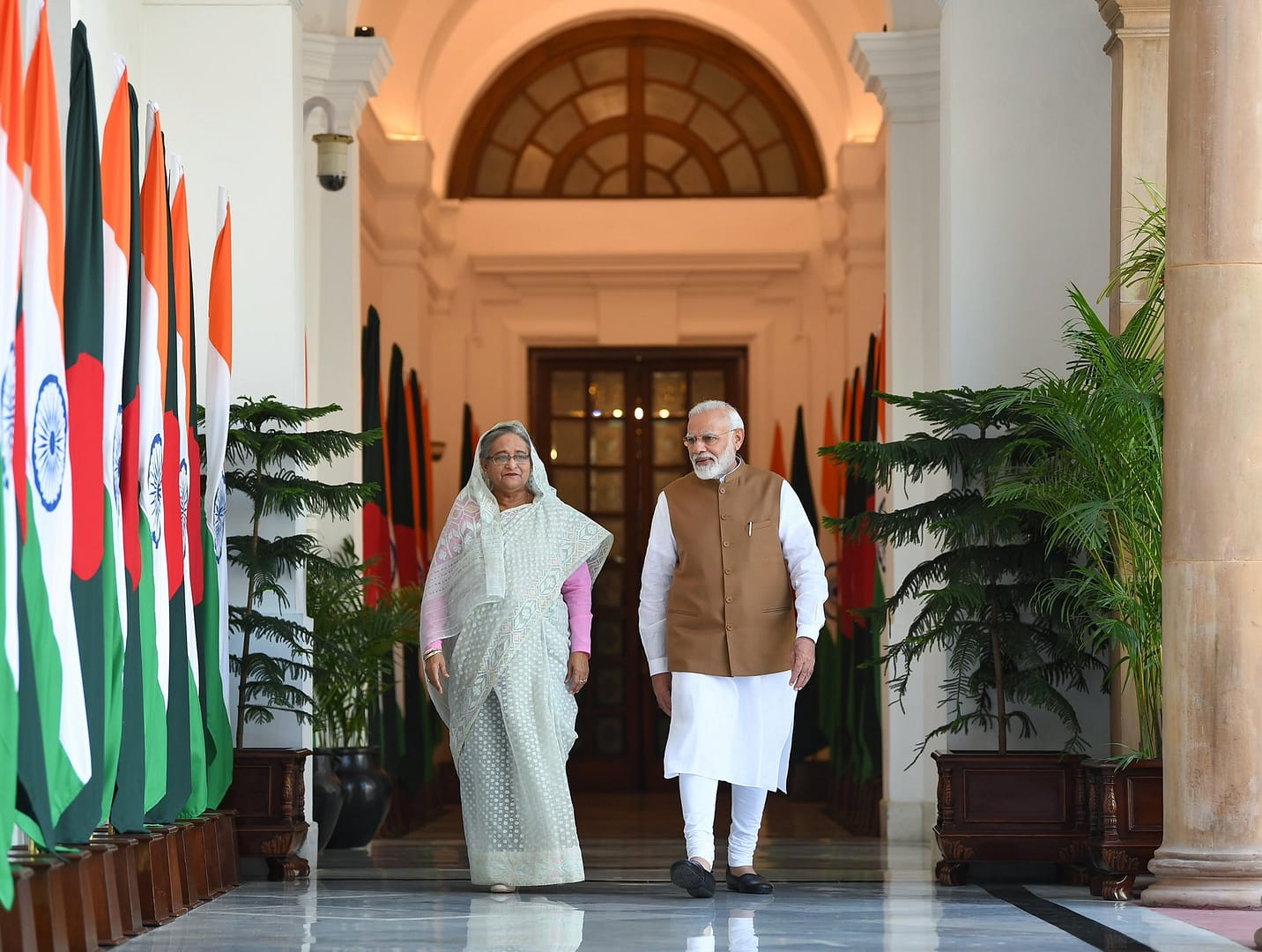
The turning point came with the mass student-led uprising of 2024 in Bangladesh, which culminated in the removal of Prime Minister Sheikh Hasina. Her leadership had been closely associated with stability in relations with India and a willingness to cooperate on sensitive security and connectivity issues
| By Swati Sinha
India–Bangladesh relations are presently experiencing their most volatile phase of tension in decades. Diplomatic engagement has slowed, economic and connectivity initiatives have stalled, and public sentiment has hardened, as protests in India over minority violence in Bangladesh and Dhaka’s demands regarding former Prime Minister Sheikh Hasina underscore the growing strain in bilateral ties.
On 18 December 2025, Sharif Osman Hadi, a prominent youth leader, was killed by masked assailants in Dhaka. The attack took place a day after authorities announced the first elections since the 2024 uprising—elections that Hadi intended to contest as an independent candidate. His assassination has further exacerbated violence across Bangladesh.
In parallel, protests erupted outside Bangladesh’s High Commission in New Delhi following the lynching of 27-year-old Hindu factory worker Dipu Chandra Das in Bangladesh’s Mymensingh district over alleged blasphemy. Although multiple arrests have been made, the incident has further aggravated already strained India–Bangladesh relations. These developments reflect a sharp erosion of trust, starkly contrasting with the collaborative nature that defined bilateral ties until recently.
This moment of strain, however, cannot be understood in isolation. It is the product of both immediate political triggers and longer-term structural frictions that have resurfaced following a political transition in Bangladesh. To assess the current crisis, it is essential to situate it within the broader historical and strategic context of India–Bangladesh relations.
From Liberation to Partnership: The Foundations of Cooperation
For much of the post-1971 period, India and Bangladesh shared a relationship often regarded as unique in South Asia. India’s role in Bangladesh’s liberation laid a foundation of goodwill, underlined by shared history, linguistic and cultural ties, and geographic interdependence. Despite limited resources and training, Bengalis—especially students and youth—mobilised in resistance, while widespread atrocities forced about 10 million civilians, mainly women and children, to seek refuge in India. This unprecedented refugee influx created significant humanitarian and political pressures for New Delhi. India responded with sustained diplomatic, logistical, and moral support, carefully balancing restraint with regional responsibility. Following Pakistan’s attacks on Indian territory on 3 December 1971, India’s direct military intervention, in coordination with Bangladeshi forces, decisively altered the balance of power, culminating in Pakistan’s surrender on 16 December 1971 and the emergence of Bangladesh as an independent state.
Despite limited resources and training, Bengalis—especially students and youth—mobilised in resistance, while widespread atrocities forced about 10 million civilians, mainly women and children, to seek refuge in India
Over time, this foundational goodwill was institutionalised through expanding cooperation across multiple domains: (i) trade and energy partnerships grew steadily, (ii) cross-border connectivity projects improved physical and economic integration, and (iii) close coordination on counter-terrorism and border security helped address shared threats. India’s backing of Bangladesh’s development objectives, alongside Dhaka’s cooperation on regional security, reinforced the partnership and enabled both countries to convert shared historical bonds into a sustained partnership.
In the years preceding the current crisis, bilateral relations were frequently described as being in a “golden era.” Enhanced transit and transport agreements facilitated smoother movement of goods and people, trade volumes expanded, and joint security efforts deepened trust. Regular high-level exchanges and coordination in regional and sub-regional forums reflected a convergence of strategic interests. While differences over issues such as water sharing and trade imbalances persisted, they were managed mainly through dialogue, underpinned by political alignment and a shared commitment to pragmatic, forward-looking engagement.
Political Upheaval in Bangladesh and Diplomatic Recalibration
The turning point came with the mass student-led uprising of 2024 in Bangladesh, which culminated in the removal of Prime Minister Sheikh Hasina. Her leadership had been closely associated with stability in relations with India and a willingness to cooperate on sensitive security and connectivity issues. Hasina left Bangladesh in August 2024 during the unrest and has been living in India since then.
For Bangladesh’s interim leadership, India’s decision to host Hasina has been perceived as more than a humanitarian gesture. It has been interpreted as implicit political backing for a former regime now discredited in domestic discourse. This perception has fuelled accusations of interference and contributed to a sharp decline in trust between the two governments.
From New Delhi’s perspective, the situation has been more complex. External Affairs Minister Dr. S. Jaishankar has stated that Hasina’s stay in India is a “personal decision.” India, while remaining supportive, emphasises that her long-term presence in India will be determined by Hasina herself, not by the host government.
Societal, Economic, and Geopolitical Pressures on Bilateral Cooperation
Societal Impact: Adding to the crisis are societal and communal tensions that have spilled into the bilateral relationship. Incidents of violence against religious minorities in Bangladesh, particularly Hindus, have triggered strong reactions in India. These events resonate in Indian domestic politics, where regional minority protection is framed as a constitutional and moral responsibility. Bangladesh, in turn, contests what it perceives as exaggerated or politicised narratives from Indian media and political actors, arguing that such portrayals inflame public opinion and erode diplomatic trust. Distorted media coverage in both countries often amplifies minor conflicts or presents one-sided narratives, shaping public perception and eroding trust. For instance, Bangladeshi outlets portray India’s response to illegal migration as excessively harsh, while Indian media exaggerates the scale of crossings without contextualising the underlying causes. This feedback loop has constrained diplomatic flexibility, making compromise politically costly.
Economic Impact: The crisis has further had economic repercussions. Bilateral trade, which had been expanding steadily, has slowed amid uncertainty. Disruptions to rail and road connectivity have affected supply chains, with particular consequences for India’s northeastern states, which rely heavily on transit through Bangladesh to access ports and markets. Negotiations on deeper economic integration, including a comprehensive free trade agreement, have stalled.
Geopolitical Impact: Strategically, the situation unfolds amid intensifying great-power competition, with Bangladesh seeking to diversify external partnerships, including expanded cooperation with China, which India views with concern, given the proximity of its northeastern corridor. From India’s perspective, sustained engagement with Bangladesh has been critical to maintaining a stable regional balance and preventing external actors from exploiting geopolitical fault lines.
Structural Impact: Structural frictions, such as unresolved Teesta River water-sharing disputes and recurring border management challenges, including migration, smuggling, and sporadic violence, persist as stressors, with their resolution dependent on the political goodwill currently in short supply.
Way Forward: Between Rupture and Recalibration
Despite the severity of the current tensions, prolonged estrangement would serve neither country’s long-term interests. India’s South Asia policy relies on stable neighbourhood relations to ensure security, connectivity, and economic integration. Bangladesh, as one of the region’s fastest-growing economies, benefits significantly from access to Indian markets, transit routes, and energy cooperation.
A way forward will require restraint, pragmatism, and confidence-building measures. Restoring full diplomatic engagement, reviving trade and connectivity channels, and preventing communal issues from dominating bilateral discourse are essential first steps. Whether this moment becomes a lasting rupture or a necessary recalibration will depend on the choices made in the months ahead.
The author leads the Neighbourhood and China portfolio at Ananta Centre. She holds an M.A. in Geopolitics and International Relations from MAHE. Her research focuses on Security Studies, IR theories and Conflict Management, with contributions to book chapters and journal articles. She has recently co-authored the book “ITEC at 60: India’s International Development Partnerships” printed by Thomson Press.