


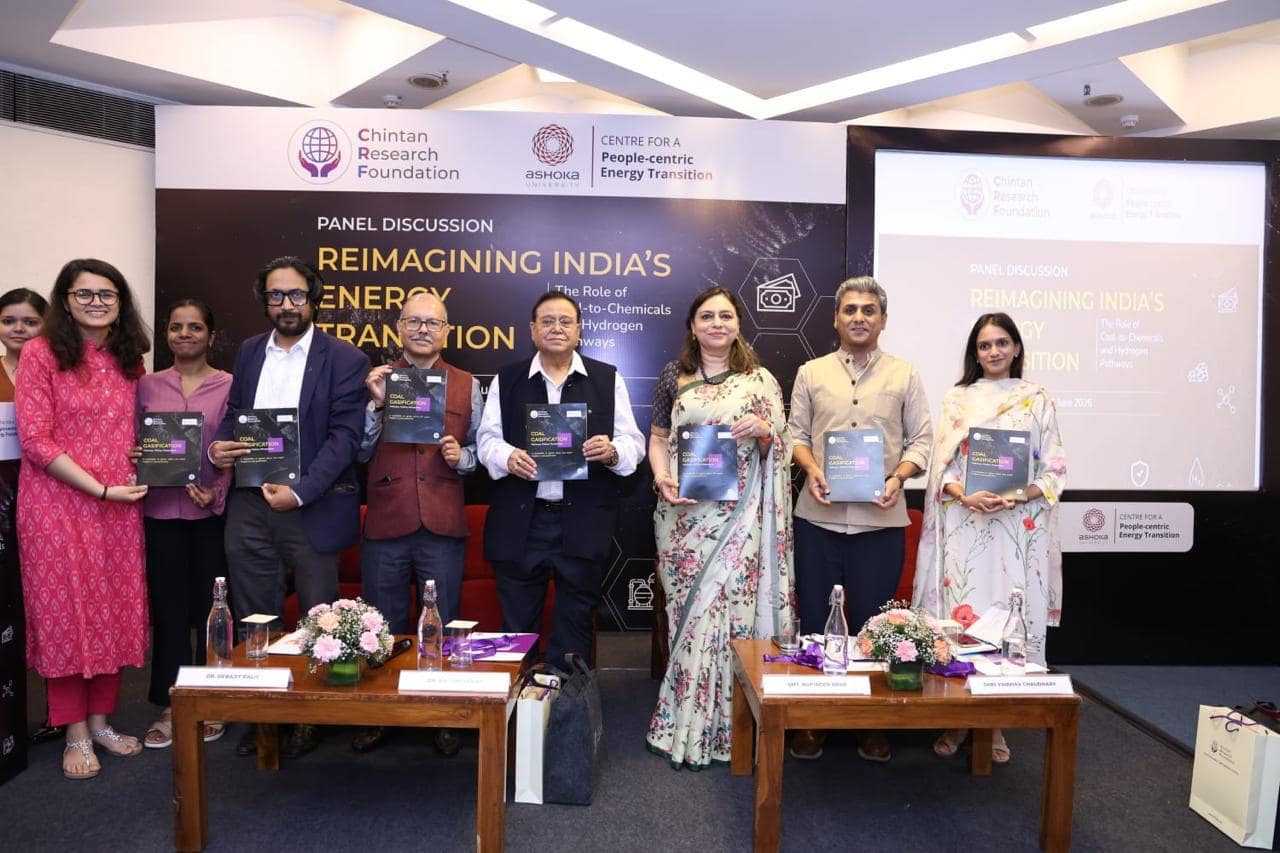
NEW DELHI, June 12, 2026 /debcubspark.com-DigiTIMES./ — “A paradigm shift has to take place in the way we use coal, and that will be through clean coal technologies,” remarked Dr. V.K. Saraswat, Former Member, NITI Aayog, during a panel discussion on Reimagining India’s Energy Transition: The Role of Coal-to-Chemicals and Hydrogen Pathways, jointly organised by the Chintan Research Foundation (CRF) and the Ashoka Centre for a People-centric Energy Transition (ACPET) on June 11, 2026, at India Habitat Centre, New Delhi.
With coal accounting for over 70 per cent of India’s electricity generation and reserves estimated at nearly 400 billion tonnes, the discussion examined how coal gasification, coal-to-chemicals pathways, and low-carbon hydrogen production can support the country’s goals of energy security, industrial growth, and decarbonisation.
Bringing together policymakers, industry leaders, and researchers, the event provided a platform to discuss the opportunities and challenges associated with scaling coal gasification and its downstream applications in India.
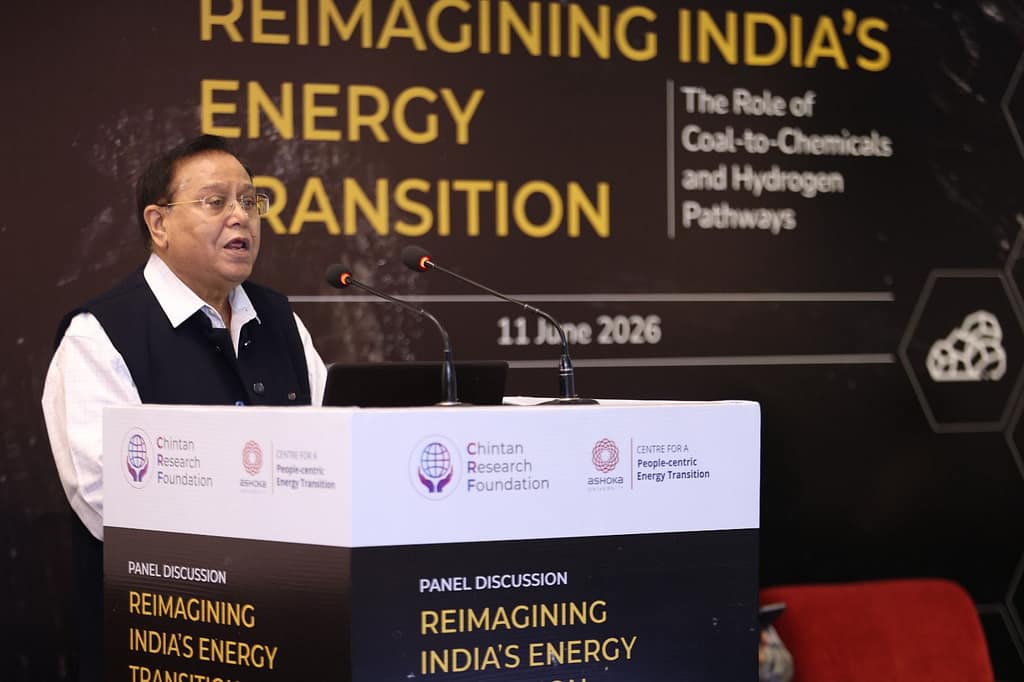
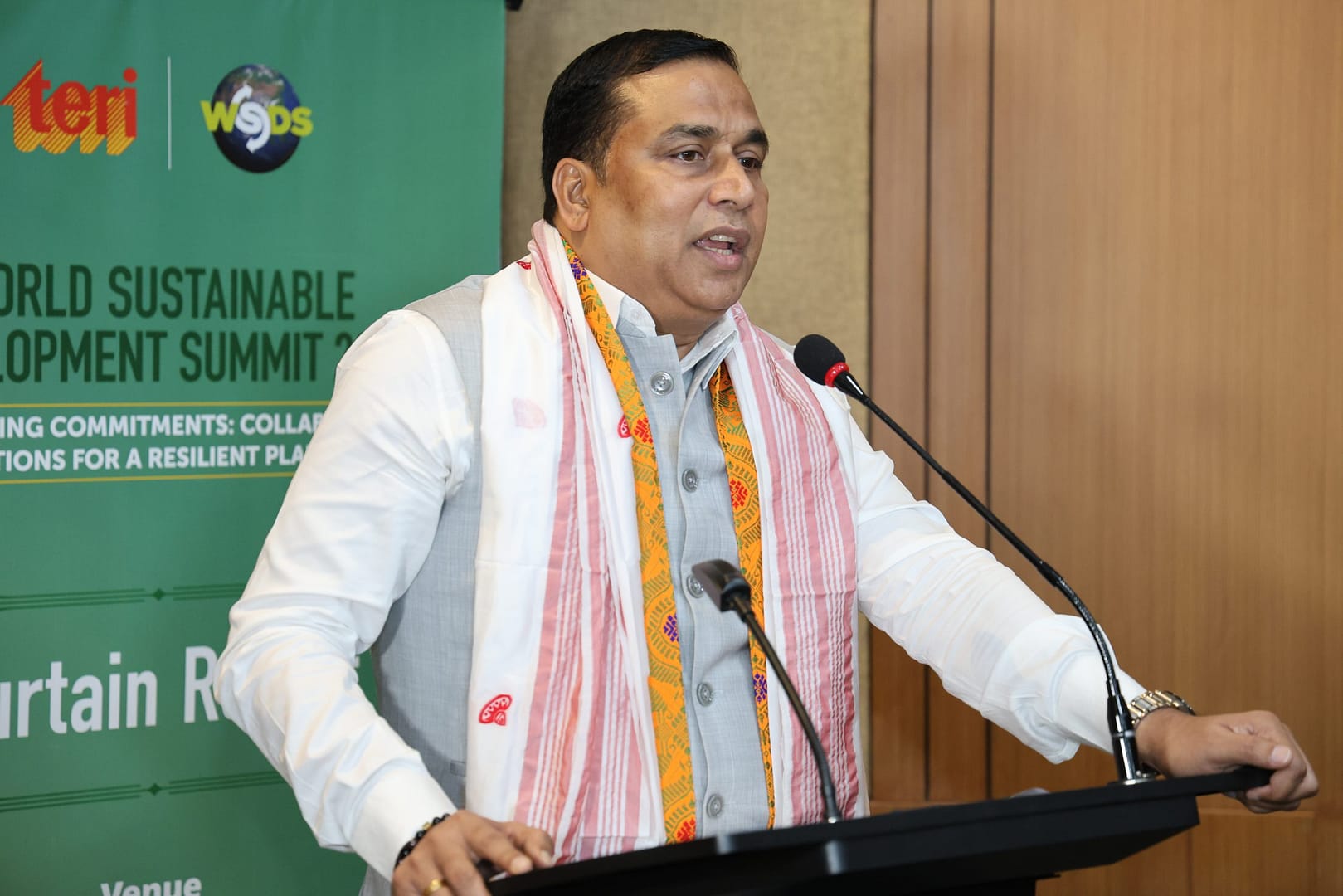
Delivering the inaugural address, Dr. V.K. Saraswat stressed that energy security must remain central to India’s transition strategy. Noting India’s substantial import bill of ₹2.77 lakh crore in FY2025 for products such as LNG, methanol, ammonia, and coking coal, he highlighted coal gasification and coal-to-chemicals pathways as opportunities to reduce import dependence while supporting industrial growth and decarbonisation.
In her keynote address, Smt. Rupinder Brar, Additional Secretary, Ministry of Coal, emphasised that innovation must remain central to India’s energy transition strategy. She noted that while coal has often been portrayed negatively in global climate discussions, many of those narratives originated in regions that had already exhausted substantial portions of their own coal resources. India, she argued, must develop its energy pathways based on its resource realities and developmental priorities.
In his welcome address, Shri Vaibhav Chowdhary, Director, ACPET, noted that while renewable energy will play a central role in India’s energy transition, coal is likely to remain an important part of the country’s energy mix for decades. He emphasised the need to explore how India’s abundant coal resources can contribute to energy security, economic growth, and net-zero goals.
Dr. Debajit Palit, Centre Head, Centre for Climate Change and Energy Transition, CRF, observed that despite global debates surrounding coal, the resource continues to hold strategic significance for India. Referring to coal as “buried sunshine,” he emphasised that India’s energy future requires both renewable resources and the efficient utilisation of domestic fossil resources. He argued that coal gasification offers an opportunity to simultaneously advance economic security and environmental objectives.
The first panel discussion, Coal to Syngas: The Coal Gasification Route, moderated by Dr. Anandajit Goswami, Research Lead, ACPET, featured Shri A.K. Jha, Former Chairman, Coal India Ltd.; Dr. A.K. Balyan, Secretary General, Coal Gasifier Association; Smt. Anjali Jain, Consultant (Energy), NITI Aayog; and Shri Saptarshi Bhattacharya, Senior Principal Engineer, Dastur Energy.
The discussion explored the technological and policy landscape for coal gasification in India. Panellists stressed the need for India to proactively develop technologies suited to its resource base while leveraging recent policy support and global technological advancements. They also examined the role of carbon capture, utilisation and storage (CCUS), underground coal mining, and coal-bed methane in improving resource efficiency and supporting low-carbon industrial pathways.
The second panel discussion, From Syngas to Value: Chemicals and Hydrogen Pathways, moderated by Dr. Pankaj Sharma, Former Additional Director, Petroleum Planning and Analysis Cell (PPAC), Ministry of Petroleum and Natural Gas, featured Prof. K.K. Pant, Director, IIT Roorkee; Shri Naveen Ahlawat, Sustainability & Decarbonisation, Jindal Steel & Power Ltd.; Shri Balasaheb Darade, Founder and Managing Director, New Era Cleantech; Shri Rajesh Kumar Jha, CEO, Adani SynEnergy Ltd.; and Dr. Sambit Basu, Energy Economist.
The discussion explored the techno-economic viability of converting coal-derived syngas into hydrogen, chemicals, and other value-added products. Panellists highlighted the importance of supportive policy frameworks, financing mechanisms, and infrastructure development in scaling these pathways, while emphasising the need to integrate coal gasification with CCUS. Discussions also touched upon carbon markets, water requirements, and the environmental considerations associated with large-scale deployment.
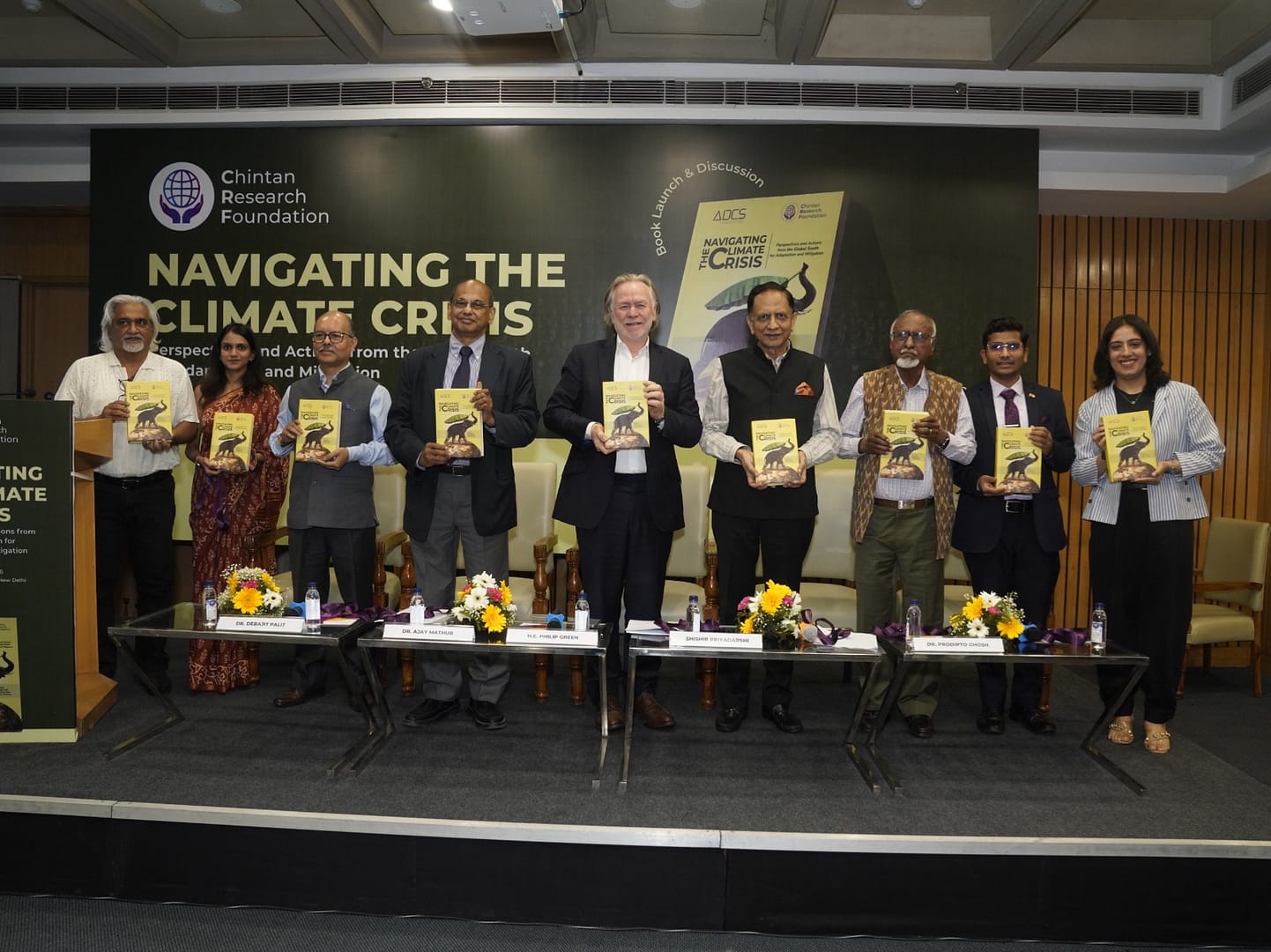
The event also featured the release of two publications: a compilation of critical perspectives on coal gasification, jointly published by CRF and ACPET, and CRF’s issue brief, Black Coal, Clean Molecule, which examines the strategic case for coal-to-hydrogen pathways in India.
The discussions highlighted the complex trade-offs involved in balancing energy security, industrial development, and decarbonisation. There was broad agreement on the need for continued innovation, technological advancement, and evidence-based policymaking to support India’s evolving energy transition.