


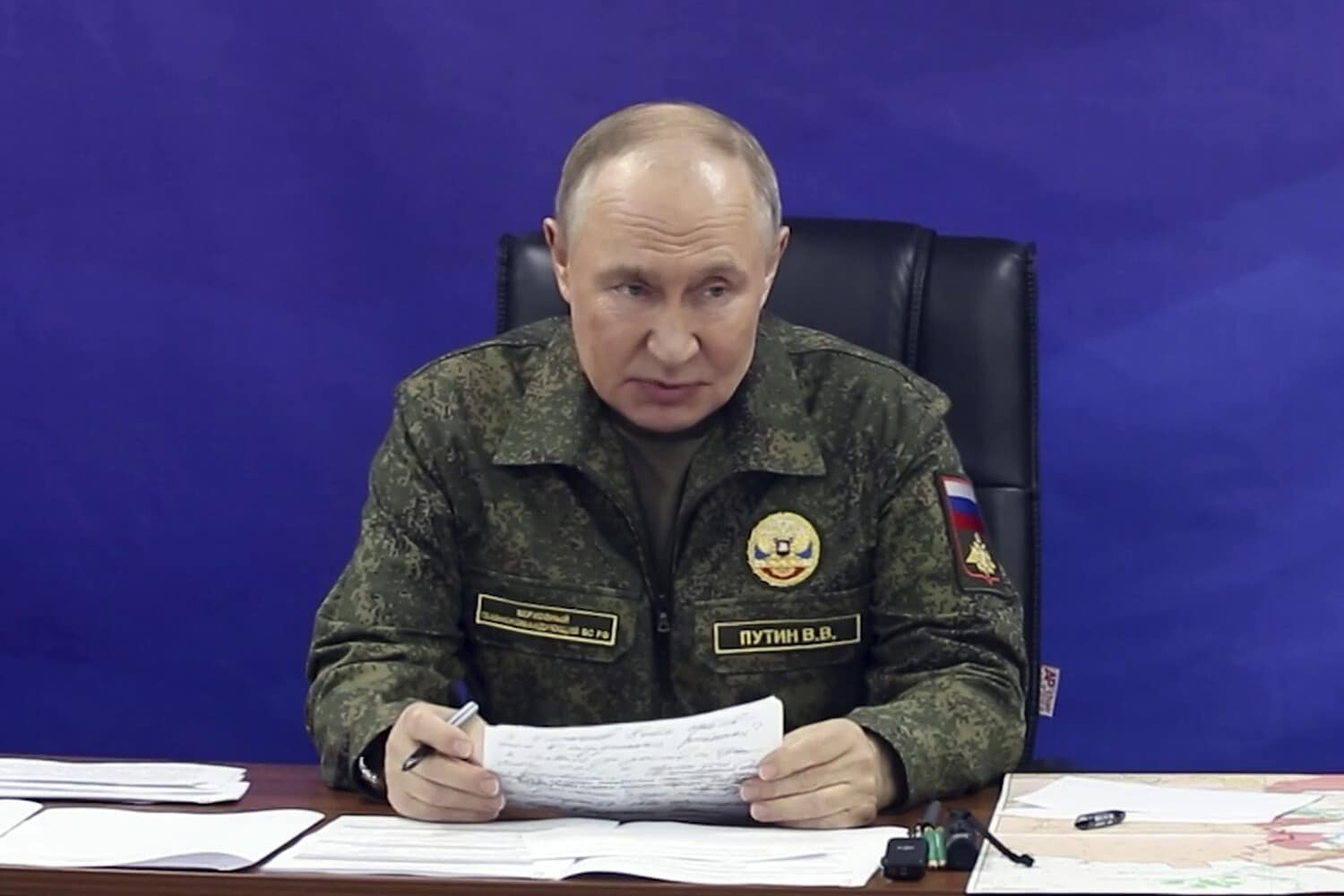
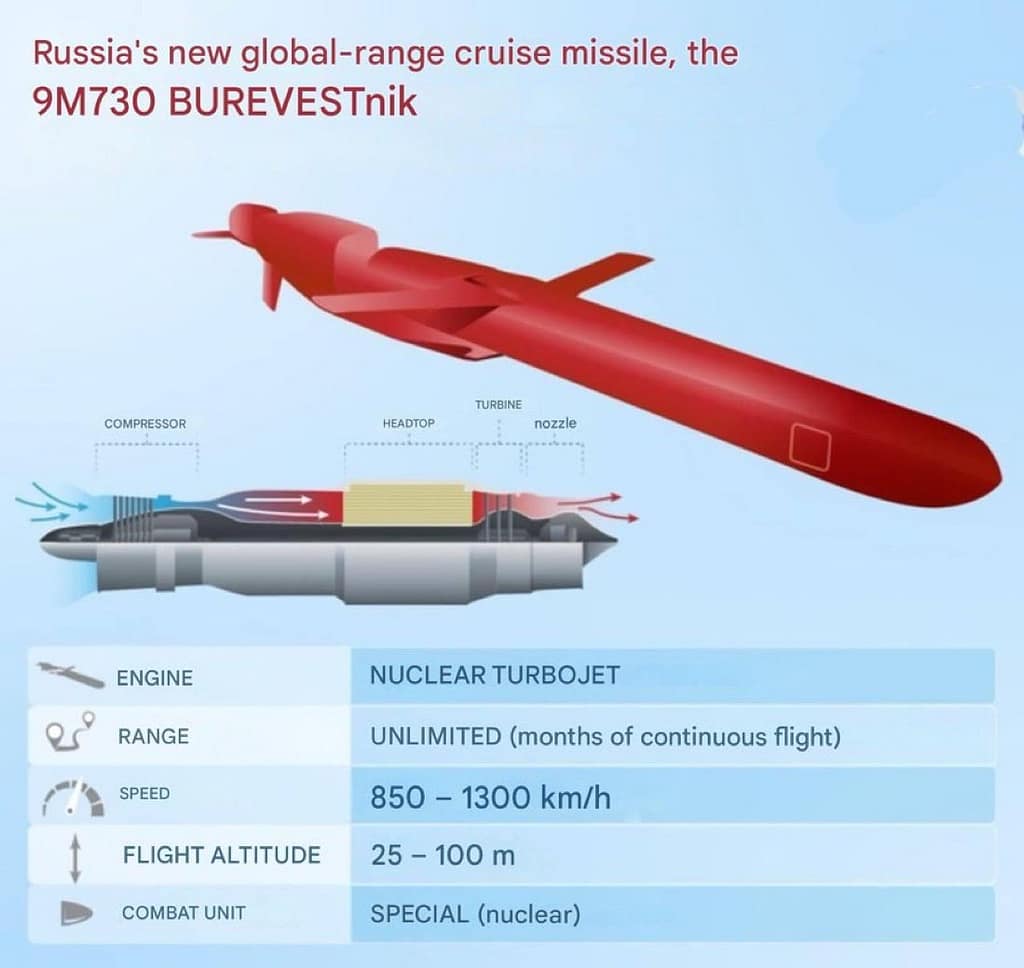
On October 26, Russia successfully tested Burevestnik, a nuclear-powered and nuclear-capable cruise missile. President Vladimir Putin declared that the system could overcome any existing or foreseeable defence mechanism. Reportedly, the missile covered a distance of nearly 14,000 kilometres (8,700 miles), demonstrating exceptional range and endurance. The Kremlin claimed that Burevestnik showcased “high capabilities in evading anti-missile and anti-aircraft defences,” asserting that its design enables it to defeat “any anti-missile defences.” The Kremlin hailed it as a powerful strategic asset that would reinforce the nation’s long-term security.
This latest test appears to have been conducted against the backdrop of deteriorating diplomatic ties between Moscow and the West—particularly between Presidents Vladimir Putin and Donald J. Trump. On October 27, Russian Foreign Minister Sergey Lavrov criticised the Trump administration for altering Washington’s approach to ending the Ukraine conflict. Following the August meeting between the two leaders in Alaska, Trump had signalled an interest in achieving a long-term peace agreement without insisting on a prior ceasefire. However, Moscow has since grown increasingly disillusioned by new US sanctions targeting two of Russia’s major energy firms. The Kremlin views Trump’s fluctuating positions on the Ukraine war as undermining both trust and stability in Europe.
Trump’s unpredictable diplomacy is contributing to Europe’s growing insecurity—compounding the devastation already inflicted on Ukraine by ongoing Russian military assaults. Moscow’s unveiling of a missile that can reportedly reach the US mainland serves as a strategic warning aimed at deterring Western nations from further aiding Kyiv.
During the sidelines of the UN General Assembly in September, Trump had remarked that Ukraine, with European assistance, could reclaim all its occupied territories. He reportedly came close to finalising an agreement with Kyiv on the supply of Tomahawk missiles, and even described Russia as a “paper tiger.” Meanwhile, Europe has accelerated its defence modernisation. Nations such as Poland and Denmark have faced tense skirmishes with Russian forces, while the Baltic states recently annulled the landmine treaty and expanded their military preparedness.
Putin, speaking at the Valdai Discussion Club, voiced disappointment over Finland’s accession to NATO. Although Helsinki has pledged not to host weapons threatening Russia, Putin publicly expressed scepticism and announced plans to establish a new military district along the shared border. Deployment of nuclear warheads or facilities by Moscow in this part of Europe will not be a surprise in the near future.
The emergence of Burevestnik and Europe’s rapid defence build-up have turned the continent into a ticking geopolitical time bomb. Could this push more European nations—beyond France and the United Kingdom—to pursue independent nuclear deterrents? Will NATO’s five host countries for US nuclear weapons—Belgium, Germany, Italy, the Netherlands, and Turkey—seek their own nuclear capabilities? The world now faces an unsettling question: is Europe on the brink of a renewed nuclear arms race?
*Dr. Indrani Talukdar is a Fellow at the Chintan Research Foundation, New Delhi.