


New Delhi: In a major push to enhance safety and security across railway premises, the Delhi Division of Indian Railways has begun deploying Artificial Intelligence (AI)-based surveillance cameras at key railway stations. The initiative, being implemented by the rail administration in coordination with the Railway Protection Force (RPF), aims to curb crime and ensure safer movement for passengers who use these stations every day.
Under this project, advanced AI-enabled cameras are being installed not only at the New Delhi Railway Station but also at other important stations in the Delhi Division, including Anand Vihar, Shakur Basti and Nangloi. Railway Officials said the installation work is progressing at a fast pace and more stations will be covered in the coming phase.
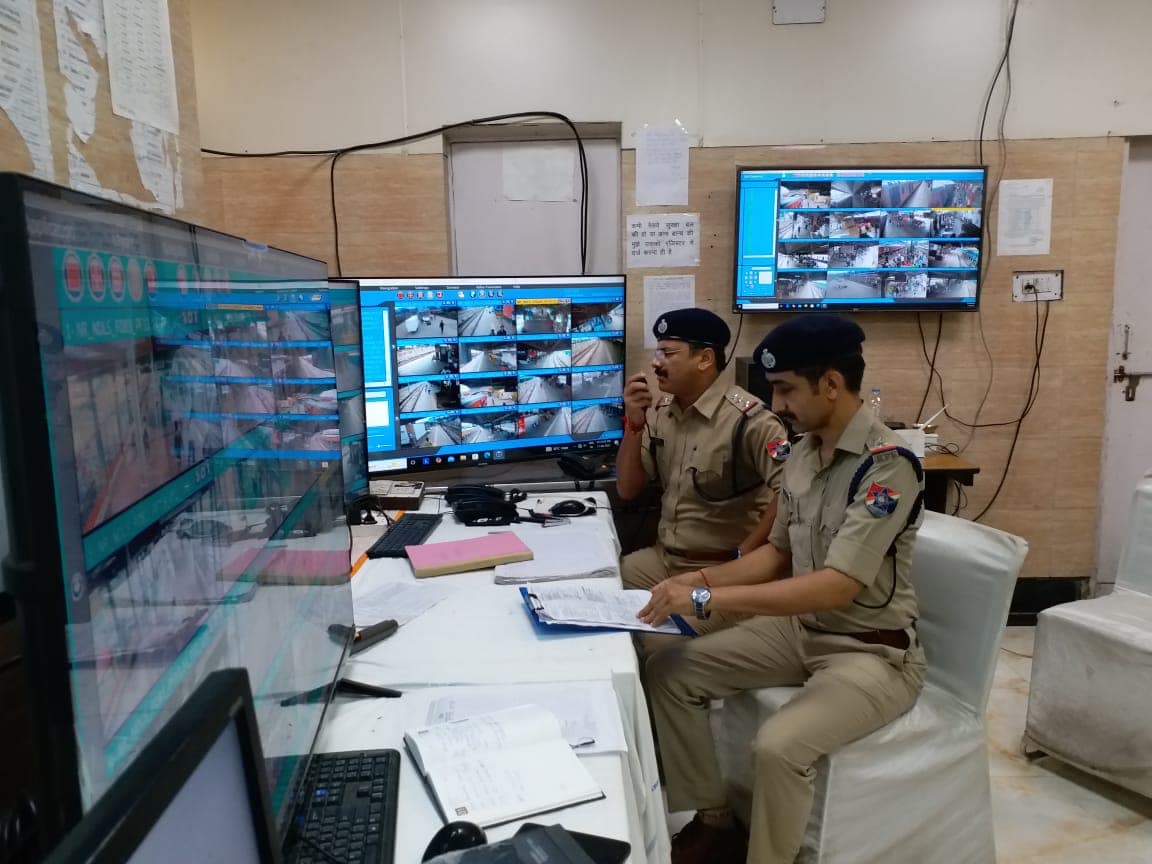
The newly deployed cameras are equipped with cutting-edge features such as video analytics, a video management system, and facial recognition technology. These systems are designed to detect suspicious activities and identify wanted criminals in real time. Once a suspect is detected, the system immediately generates an alert, which is sent to the concerned control room for swift action by security personnel and police.
Railway stations in the national capital have long been considered sensitive from a security perspective due to incidents of theft, pickpocketing, suspicious movements and the presence of wanted criminals. Keeping this in mind, the rail administration has increasingly turned to technology-driven solutions to support conventional policing and surveillance mechanisms.
Delhi Division Security Commissioner Ashutosh Pandey said that around 280 AI-based cameras are being installed in the initial phase at the New Delhi Railway Station alone. He described the technology as a “force multiplier” for security agencies. According to him, the integration of video analytics, video management systems and face recognition systems (FRS) will make it possible to identify suspects even in heavy crowds, which is otherwise a major challenge at busy stations.
Ashutosh Pandey further clarified that these AI cameras are being linked with the criminal databases of the local police (Delhi Police) as well as the RPF. This integration will allow real-time identification of wanted criminals and enable immediate action against them, significantly reducing response time during critical situations.
The AI surveillance initiative is not limited to Delhi alone. Railway Officials said RailTel is implementing this project across the entire Delhi Division, and similar AI-based CCTV systems will be gradually installed at other major and sensitive railway stations across the country. Security experts believe that the introduction of AI-powered surveillance will act as a strong deterrent for criminals while boosting the confidence and sense of safety among ordinary passengers.
With millions of commuters passing through Delhi’s railway stations daily, authorities hope that this technology-driven approach will mark a significant step forward in modernizing railway security and ensuring a safer travel experience.