


| By Dr. MJ Khan
The recently announced India–United States trade framework has attracted intense attention and divergent interpretations, particularly around its implications for Indian agriculture and farmers. While public debate has largely focused on immediate tariff concessions and political claims of “market opening,” the more consequential issues lie in the long-term opportunities for trade, investment, technology cooperation, and institutional alignment between the two countries. This framework is best understood not as a conventional trade agreement, but as a strategic signal of deeper engagement between two major economies navigating global supply-chain reconfiguration and geopolitical uncertainty.
Historically, agricultural trade between India and the United States has been shaped by a structural asymmetry in protection mechanisms. India relied heavily on high tariffs, quantitative restrictions, and public procurement systems to safeguard food security and farmer livelihoods, while the United States maintained relatively low tariffs but imposed stringent non-tariff barriers in the form of sanitary and phytosanitary standards, traceability requirements, certification norms, and regulatory controls. As a result, Indian farm exports often faced practical barriers to entry in the US market, even when tariffs were low.
The current framework reflects a gradual shift away from headline tariff battles toward trade facilitation, predictability, and cooperation, while leaving the most sensitive issues for future negotiation.
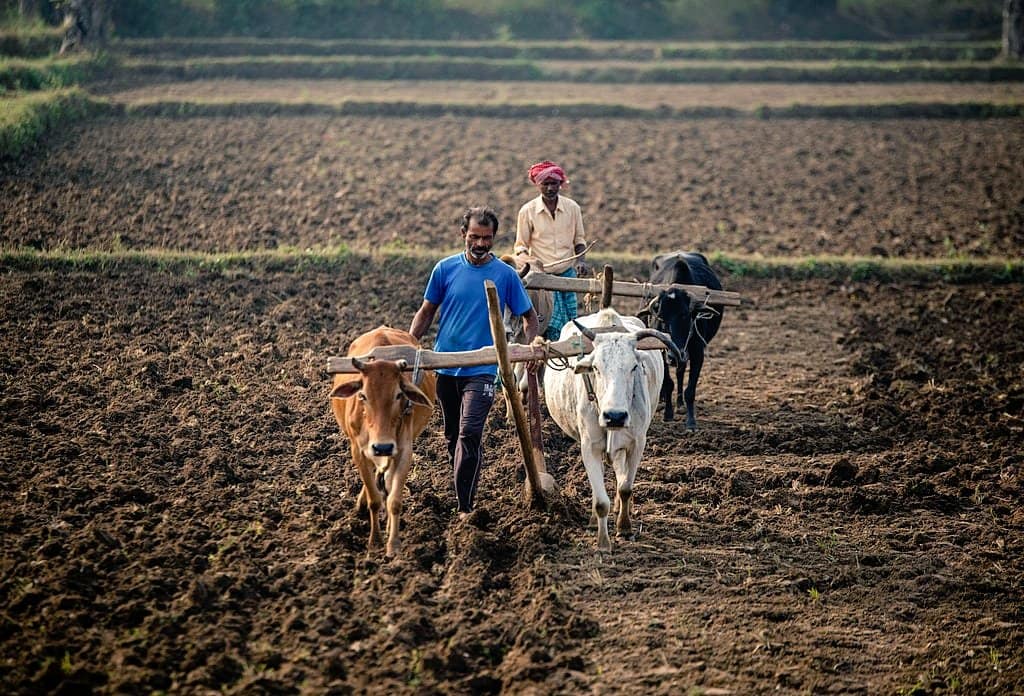
From India’s perspective, the most significant long-term opportunity lies in repositioning agriculture from a commodity-centric model to a value-led, market-oriented system. The US is not a volume market for staples such as rice or wheat, but it is a premium destination for processed foods, organics, nutraceuticals, specialty grains, spices, and geographically indicated products. If leveraged strategically, this framework can catalyse investments in food processing, cold chains, quality certification, and branding, enabling Indian farmers to capture higher value rather than compete on volume alone. Such a transition is essential for raising farm incomes without exposing core crops to destabilising import competition.
Equally important is the scope for deeper cooperation in agricultural technology, innovation, and knowledge exchange. India and the US are natural partners in areas such as climate-resilient agriculture, precision farming, digital advisory systems, water-use efficiency, soil health management, and post-harvest logistics. For Indian farmers, long-term competitiveness will depend less on tariff protection and more on access to affordable, adaptable technologies that raise productivity while reducing risk. Institutional collaboration between universities, research centres, startups, and agri-businesses can play a transformative role if aligned with Indian agro-ecological realities.
The framework also creates opportunities for strengthening livestock and allied sectors. Limited tariff reductions on select feed inputs may help reduce costs for poultry, dairy, and aquaculture, improving competitiveness and moderating consumer prices. Over time, this could support diversification of rural incomes and expansion of protein production. However, these gains will materialise only if accompanied by safeguards for domestic feed producers, investments in fodder development, and mechanisms to manage market volatility. Without such balance, cost advantages could translate into uneven outcomes across the value chain.
At the same time, the agreement raises critical issues that warrant careful scrutiny. While tariffs attract the most attention, non-tariff barriers remain the real determinant of market access. US sanitary and regulatory requirements remain largely unchanged, and without progress on mutual recognition, streamlined certification, and regulatory cooperation, improved tariff access may not translate into meaningful export growth for Indian farmers and processors. In this sense, the promise of the framework will be tested not at the border but in the regulatory space.
There is also the question of future negotiations. While the current framework excludes sensitive sectors such as dairy, staple grains, and genetically modified crops, these areas are likely to feature in subsequent rounds.
India will need to approach these discussions with clarity, preparedness, and evidence-based positions rather than reactive defensiveness. The real risk to farmers does not arise from this framework itself, but from inadequate domestic readiness for future engagement on standards, sustainability, and competitiveness.
For Indian farmers, the immediate impact of the agreement is largely neutral. There is no direct threat to MSP, public procurement, or food security mechanisms, and no sudden exposure of staple crops to imports. Benefits are more likely to accrue to export-oriented farmers and processors in the short term, while risks remain indirect and long-term. Whether these gains become inclusive will depend on how effectively farmer producer organisations are strengthened, how value chains are integrated, and how small-holders are supported in meeting quality and compliance requirements.
Ultimately, the India–US trade framework should be viewed as a platform for cooperation rather than a zero-sum contest. It reflects cautious liberalisation, strategic alignment, and recognition that future agricultural competitiveness will be driven less by border protection and more by innovation, value addition, and institutional strength. For India, the choice is whether to treat this framework as a limited political arrangement or as an opportunity to prepare agriculture for a more competitive, resilient, and farmer-centric future. The agreement itself does not determine outcomes; India’s preparedness does.
The author is Executive Director, World Agriculture Forum, Amsterdam and can be contacted at ed@worldagricultureforum.org; www.worldagricultureforum.org