



Union Home Minister Amit Shah on Monday said that India is entering a “golden era” of internal security, asserting that major threats such as Naxalism, organized crime networks and cross-border infiltration are steadily being brought under control.
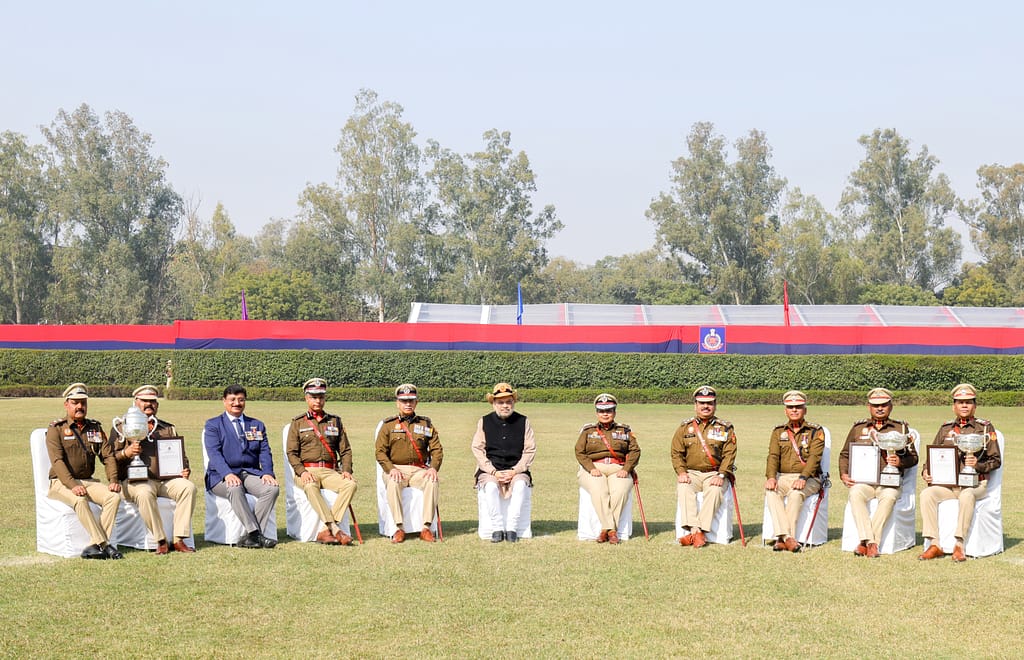
Addressing the 79th Raising Day ceremony of the Delhi Police in New Delhi as the chief guest, Shah praised the force for its role in maintaining peace in the national capital despite increasingly complex security challenges. The event was attended by senior officials, including the Delhi Police Commissioner and other dignitaries.
Shah said the capital city carries unique security responsibilities because it hosts key national institutions, foreign missions, and high-profile international events. He noted that Delhi Police has consistently demonstrated professionalism in handling threats ranging from narcotics syndicates and counterfeit currency rackets to cybercrime and terrorism cases.
Highlighting infrastructure upgrades, the Home Minister announced that the foundation stone of the Special Cell’s Integrated Headquarters was laid during the event. The facility, being built at an estimated cost of ₹368 crore, will be equipped with advanced features including an indoor firing range, cyber laboratory, war room, and modern training facilities. According to Shah, the center will strengthen the force’s capacity to deal with terrorism, organized crime, and sophisticated criminal networks and will serve as a model for police units across the country.
He also inaugurated the first phase of the Safe City Project, worth around ₹857 crore, under which a modern Integrated Command, Control, Communication and Computer Centre (C4I) has been established. Shah said more than 2,100 cameras are already operational under the project, while over 15,000 existing cameras have been integrated into the system. The project aims to significantly enhance surveillance, emergency response, and crime prevention in the national capital.
Speaking on broader internal security, Shah credited the leadership of Prime Minister Narendra Modi for major improvements over the past decade. He said the period from 2014 to 2026 would be remembered as a historic phase in India’s internal security landscape, citing progress in Jammu and Kashmir, the Northeast, and areas affected by Left-wing extremism.
The Home Minister stated that Naxalism, once spread across 11 states, is now nearing complete elimination and expressed confidence that the country would be free from Naxal violence by March 31, 2026. He also pointed to peace agreements and rehabilitation efforts in the Northeast, where thousands of youths have joined the mainstream.
Shah emphasized the importance of recently enacted criminal laws, collectively known as the new Nyaya Sanhitas, saying they would modernize India’s justice system, reduce delays, and significantly improve conviction rates. He noted that the laws provide legal backing to e-FIRs, strengthen provisions related to crimes against women and children, and integrate various components of the criminal justice system through digital platforms.
Looking ahead, Shah said the Ministry of Home Affairs plans to expand nationwide CCTV networks and further modernize border security systems to prevent infiltration and strengthen national safety. He reaffirmed the government’s commitment to building a robust and technology-driven security framework capable of addressing emerging threats in the years to come.