


| By Dr. MJ Khan
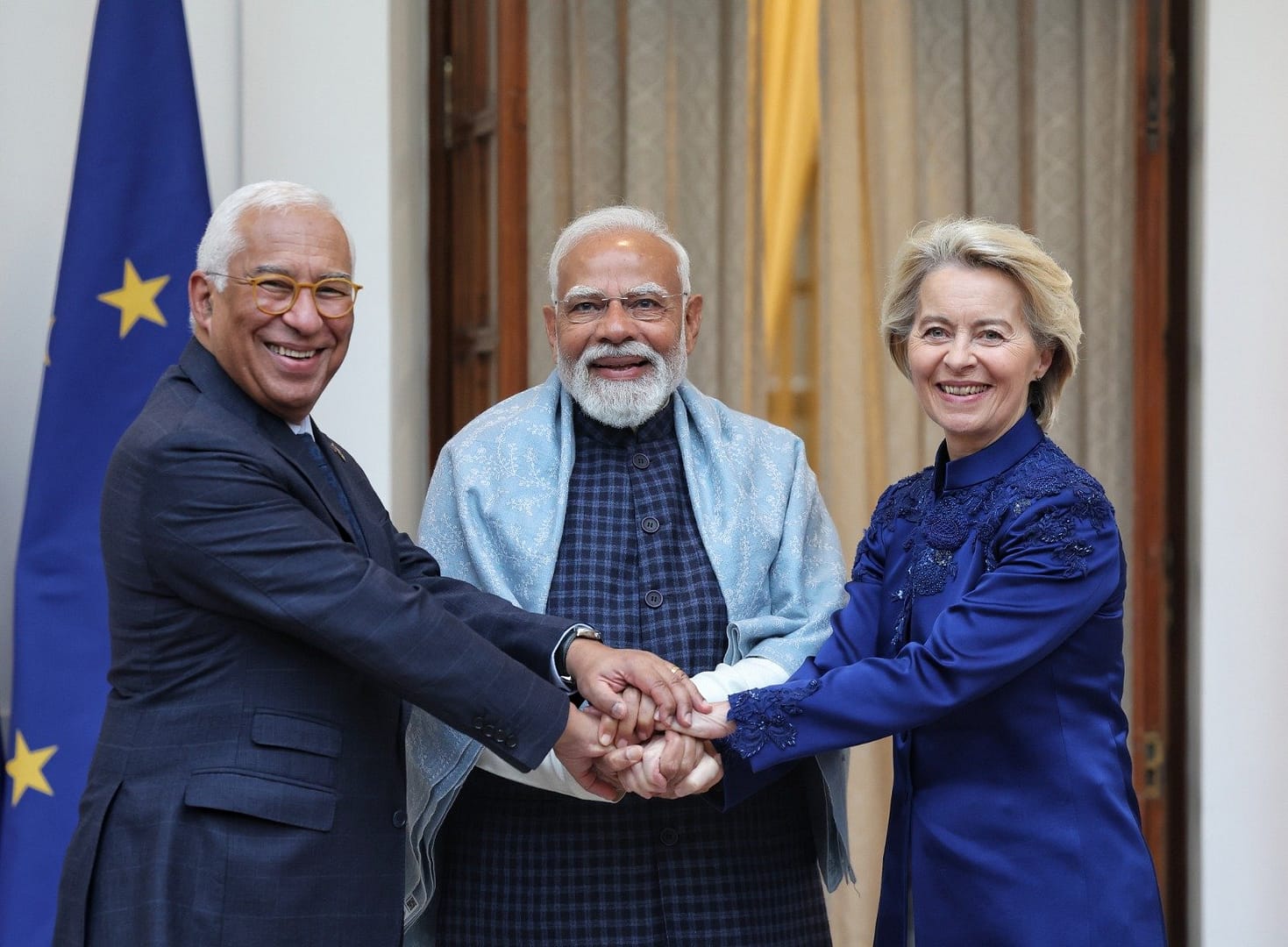
The India–European Union Free Trade Agreement (FTA) is far more than a bilateral trade accord. When two economic blocs that together account for around 25–30% of global GDP, nearly one-third of global consumers (over 2.1 billion people), and about one-third of world trade align their trade, regulatory, and sustainability frameworks, the impact inevitably ripples across global markets. In agriculture and food, this agreement has the potential to recalibrate global supply chains, redefine standards, and influence how food is produced, traded, and consumed worldwide.
A New Centre of Gravity in Global Food Demand
India and the EU represent two distinct yet complementary food economies. India is among the world’s largest producers of agricultural commodities, with over 140 million hectares of arable land, nearly 150 million farm households, and a rapidly expanding food processing sector. The EU, in contrast, is one of the world’s largest agri-food importers, with annual agri-food imports exceeding USD 200 billion, driven by high purchasing power and increasingly sustainability-conscious consumers.
By integrating these two systems more deeply, the FTA creates a new centre of gravity in global food demand and supply. This alignment will influence international prices, sourcing strategies of multinational food companies, and global investment flows. India’s agri-food exports to the EU—already valued at over USD 10–12 billion annually—are expected to scale significantly as tariffs are reduced and regulatory barriers streamlined. Exporters from Latin America, Africa, Southeast Asia, and Oceania will increasingly find themselves competing in a marketplace reshaped by India’s improved access, scale, and competitiveness.
Setting Global Benchmarks Through Scale
One of the most far-reaching global impacts of the India–EU FTA lies in standards-setting. The EU has long played a defining role in shaping global norms on food safety, traceability, sustainability, and environmental compliance. India’s deeper integration into this regulatory ecosystem means that a substantial share of global agricultural production—by virtue of India’s scale—will increasingly align with EU benchmarks.
Given India’s position as one of the world’s top producers of staples, spices, fruits, vegetables, and marine products, this alignment will not remain confined to EU-bound exports. Once supply chains upgrade to meet EU requirements, the same standards tend to apply across multiple destinations. The result could be a global ratcheting up of food safety, sustainability, and traceability norms, influencing markets across Asia, Africa, and the Middle East.
Rewiring Global Agri-Food Value Chains
The agreement accelerates a shift from commodity-led trade to value-chain-led trade. Global demand for processed and high-value foods is expanding rapidly, with the global processed food market projected to exceed USD 7 trillion by 2030. India’s food processing sector—currently valued at around USD 300 billion—stands to benefit from greater EU market access, investment, and technology transfer.
As Indian exports expand in processed foods, ready-to-eat meals, specialty ingredients, nutraceuticals, and ethnic foods, global food companies are likely to rebalance sourcing and investment strategies. India could increasingly emerge as a processing and aggregation hub, influencing value chains that extend well beyond Europe, particularly into Africa and West Asia.
Climate, Carbon, and the Future of Food Trade
The FTA’s forward-looking engagement on sustainability and climate—especially in the context of carbon-related measures—signals a decisive shift in global agri-food trade. Agriculture already accounts for nearly one-quarter of global greenhouse gas emissions, and food systems are under growing scrutiny.
When two blocs of this scale embed climate considerations into trade frameworks, sustainability becomes a commercial baseline rather than a voluntary aspiration. This will influence producers worldwide. Countries exporting to either India or the EU will face increasing pressure to adopt climate-smart practices, while India’s low-input farming traditions, regenerative models, and rapidly growing agri-tech ecosystem—now attracting over USD 1.5 billion annually in investment—could offer scalable solutions for the Global South.
Strengthening Global Food Security and Stability
At a time when climate shocks and geopolitical disruptions have exposed vulnerabilities in global food systems, the India–EU FTA contributes to stability. India is among the world’s largest producers of cereals, pulses, milk, and fruits, while the EU remains a critical hub for food trade and logistics. A predictable, rules-based agri-food corridor between the two strengthens resilience not just bilaterally, but globally.
For net food-importing regions—particularly parts of Africa and West Asia—a stronger India–EU agri-food axis can help diversify supply sources and moderate volatility.
A Catalytic Role for Global Collaboration
The World Agriculture Forum (WAF) greatly welcomes the conclusion of the India–EU FTA and views it as a landmark development for global agriculture and food systems. WAF looks forward to playing a catalytic role in translating this agreement into tangible outcomes on the ground—mobilising policymakers, farmers’ organisations, agribusiness leaders, investors, and technology providers.
Beyond implementation, WAF aims to positively influence momentum toward more such forward-looking trade and cooperation frameworks globally. By encouraging greater trade, investment, and technology flows, these agreements can empower farmers, expand consumer choice, strengthen food security, and accelerate the transition toward sustainable and inclusive agri-food systems worldwide.
In this sense, the India–EU FTA is not merely a bilateral deal—it is a global signal. When nearly one-third of the world’s economic output and consumers align around agriculture, food, sustainability, and trade, the global system responds. The opportunity now lies in ensuring that this alignment delivers measurable gains for farmers and consumers across the world.
The author is Executive Director, World Agriculture Forum, Amsterdam and can be contacted at ed@worldagricultureforum.org; www.worldagricultureforum.org