


The global agriculture sector is entering a decisive decade. What lies ahead is not a simple story of higher production or expanding acreage, but one defined by volatility, adaptation, and transformation. Economic pressures, climate change, technological disruption, and shifting geopolitics are reshaping how food is produced, traded, and consumed. For policy makers, investors, and the general public alike, agriculture is fast becoming a strategic sector central to food security, economic stability, and sustainable development.
In the near future, agriculture will continue to operate in an environment of tight margins and persistent uncertainty. Oversupply in major commodities, combined with slower growth in food demand in developed economies, is keeping prices under pressure. At the same time, costs related to inputs, labour, logistics, and compliance remain elevated. This imbalance is driving consolidation across farming and agri-business, favouring scale, efficiency, and access to capital.
Smaller producers will increasingly depend on policy support, cooperative models, and access to technology to remain viable.
For policymakers, this landscape demands a shift in approach. Traditional support mechanisms focused only on price stabilization or subsidies are no longer sufficient.
The future calls for policies that enhance resilience rather than dependency. Investments in rural infrastructure, irrigation, digital connectivity, research, and extension services will be far more impactful than short-term relief measures. Clear, predictable trade and regulatory frameworks are equally critical. Sudden policy shocks, tariffs, or compliance burdens introduced mid-season can amplify losses for farmers and destabilize food systems, particularly when combined with climate stress.
Investors, meanwhile, are viewing agriculture through a new lens. While commodity farming may continue to offer modest and cyclical returns, the broader agri-food ecosystem presents strong long-term opportunities.
Technology-enabled agriculture, precision farming, biological inputs, climate-smart solutions, and integrated value chains are emerging as key growth areas.
Lower global interest rates are expected to support capital investments, making it easier to finance modernization across the sector. However, successful investment will require patience, a deep understanding of regional risks, and alignment with sustainability and food security goals.
Energy and geopolitics will also play a defining role in shaping agricultural outcomes. Stable energy prices support predictable production and transport costs, but political decisions, regional conflicts, or supply disruptions can quickly reverse this stability.
Countries and companies that invest in energy efficiency, renewables, and localized supply chains will be better positioned to manage future shocks. At the same time, global supply chains are being reconfigured as nations seek to balance efficiency with resilience, reducing over-dependence on a few production hubs.
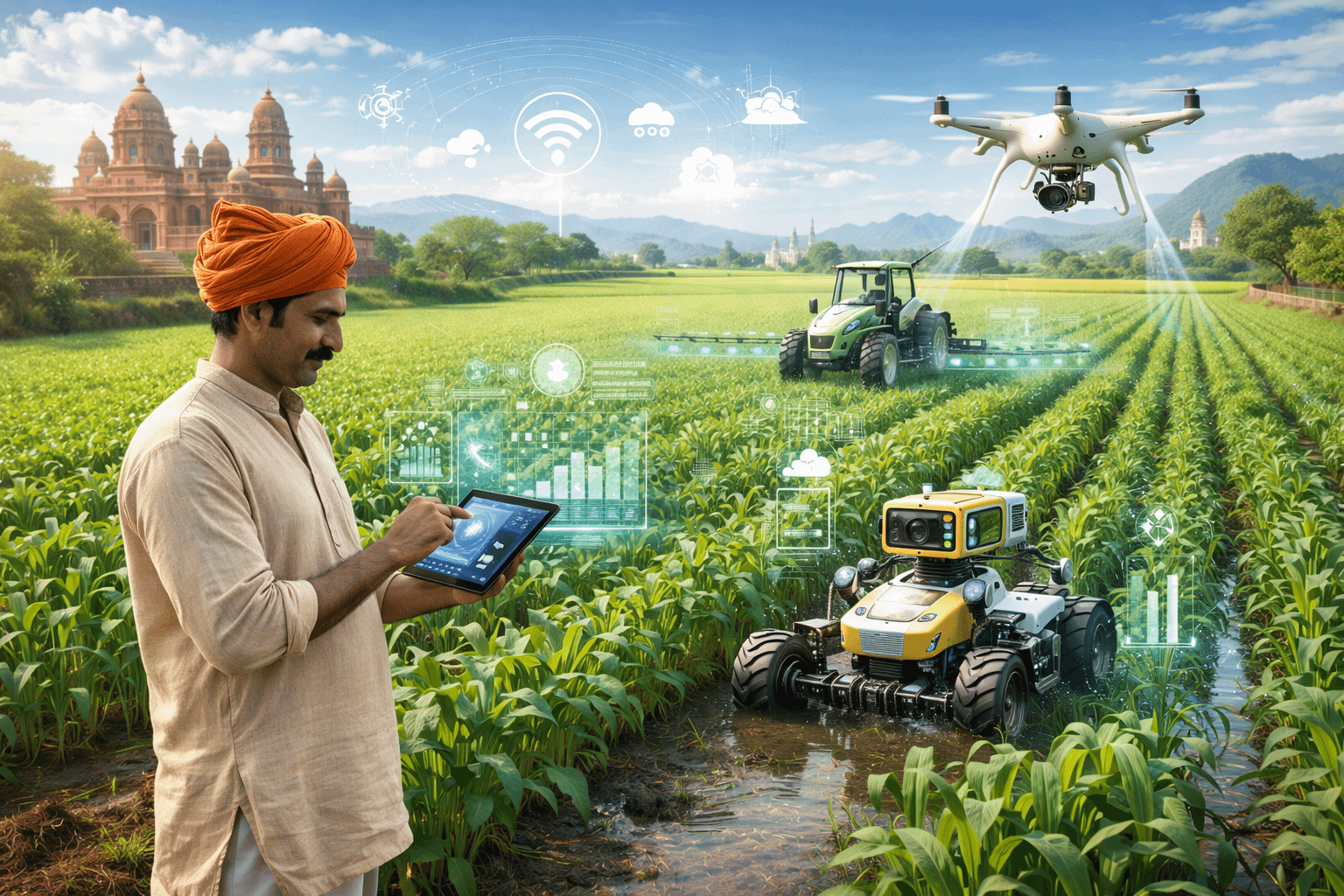
Technology stands at the center of agriculture’s future transformation. The next phase is not about isolated innovations, but integrated systems that combine artificial intelligence, digital platforms, robotics, advanced genetics, and data-driven decision-making. These tools enable farmers to optimize inputs, improve yields, protect soil health, and adapt to climate variability.
Importantly, technology is also becoming a bridge between productivity and sustainability, allowing agriculture to reduce its environmental footprint while meeting rising global food needs.
For society at large, these changes have profound implications. Agriculture is no long era background sector; it directly influences food prices, nutrition, employment, environmental health, and social stability. Climate-related crop failures, trade disruptions, or disease outbreaks can rapidly translate into food inflation and social unrest. Conversely, resilient and inclusive agricultural systems can support rural livelihoods, stabilize economies, and contribute to climate solutions through soil health and carbon management.
Looking ahead, the future of agriculture will be defined by choices made today. Policymakers must create enabling environments that reward innovation, sustainability, and resilience.
Investors must align capital with long-term value creation rather than short-term speculation. And citizens must recognize that food security and sustainable farming are shared responsibilities, not abstract concepts. If these stakeholders move in alignment, agriculture can transition from a sector under constant stress to one that anchors economic growth, environmental stewardship, and global stability in the years to come.
The author is Executive Director, World Agriculture Forum, Amsterdam and can be contacted at ed@worldagricultureforum.org; www.worldagricultureforum.org