

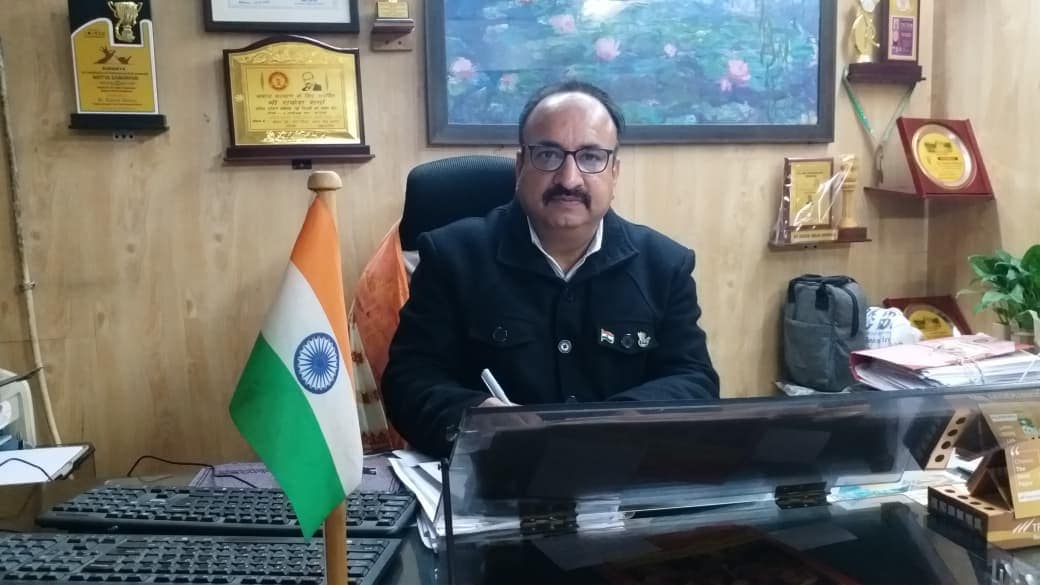
It’s one of busiest and crowded. New Delhi Railway Station where train chugs in and out every half an hour, ensuring safety of passengers is a huge challenge. On top of that there is an awe about “forgetfulness” with passengers leaving behind their belongings for their chances of recovery are relatively thin. But here’s a different story of one Railway Officer whose legacy of integrity in delivering routine service has turned into a powerful example of public service. Retired as a Station Manager on January 31, 2026, after more than three decades of service, Rakesh Sharma is fondly remembered not just as an efficient administrator, but as a symbol of integrity, empathy and dedication.
Known widely as the railway’s “lost-and-found man,” Rakesh Sharma developed a systematic approach to tracing passengers who left belongings behind during travel. From 2016 until his retirement — and even shortly afterward — he successfully helped return 1,964 lost items to rightful owners across India and several countries. The recovered items included expensive electronics, jewellery, documents, cash and personal valuables.
Solving the Impossible Cases:
Tracking owners of lost property was often extremely challenging. Many bags contained no identification. Rakesh Sharma would begin with small clues — ticket slips, labels or travel details — and then move to deeper investigation. He frequently used Passenger Name Record data to contact travellers from the same coach and would call multiple numbers to identify who had lost the item.
In cases where no leads were available, he turned to social media, posting details to trace owners. If passengers could not return to Delhi, he ensured items were safely dispatched through trains or courier after proper documentation. Even after retirement, he voluntarily helped resolve several pending cases, reflecting a commitment that extended beyond official duty.
Recognition and National Honour:
For his extraordinary service, Rakesh Sharma was awarded the prestigious Ati Vishisht Rail Seva Award in 2023 by Railway Minister. He also received numerous honours from social organizations and institutions recognizing his humanitarian contribution.
One widely shared appreciation came from on social media, which highlighted a case involving a passenger from California whose bag containing valuable electronics was recovered and returned. The passenger publicly thanked Rakesh Sharma for his prompt assistance and praised the railway staff for their efforts.
A Journey That Shaped a Philosophy:
Rakesh Sharma describes his railway career as more than employment — a lifelong philosophy shaped by discipline and service. He began in April 1990 as an Assistant Station Master in the Firozpur division, growing up in a railway family where punctuality and teamwork were part of daily life. Over nearly 36 years, he served at small stations, border-region operations, major freight yards and finally India’s busiest passenger hub. He witnessed the railway’s transformation from manual systems to advanced digital safety technologies. Throughout his career, he considered passenger assistance not an obligation but a human duty, often personally helping stranded travellers with tickets, food and safe travel arrangements.
A Legacy Beyond Administration:
Colleagues describe Rakesh Sharma as an officer who led by example, blending operational efficiency with human sensitivity. His work not only strengthened public trust in railway services but also inspired many employees to actively participate in returning lost belongings to passengers.
His story illustrates a powerful truth in a system employing millions, individual commitment can redefine institutional reputation. For countless passengers whose belongings — and peace of mind — were restored, Sharma’s service was not just administrative success but a deeply personal act of care.
As trains continue to arrive and depart from New Delhi, his legacy remains embedded in the station’s daily rhythm a reminder that true public service is measured not only by rules followed, but by humanity delivered.