TERI, A-PAG and IIT Delhi to Launch Landmark Study on Interstate Truck Emissions in Delhi
 Staff, DigiTIMES.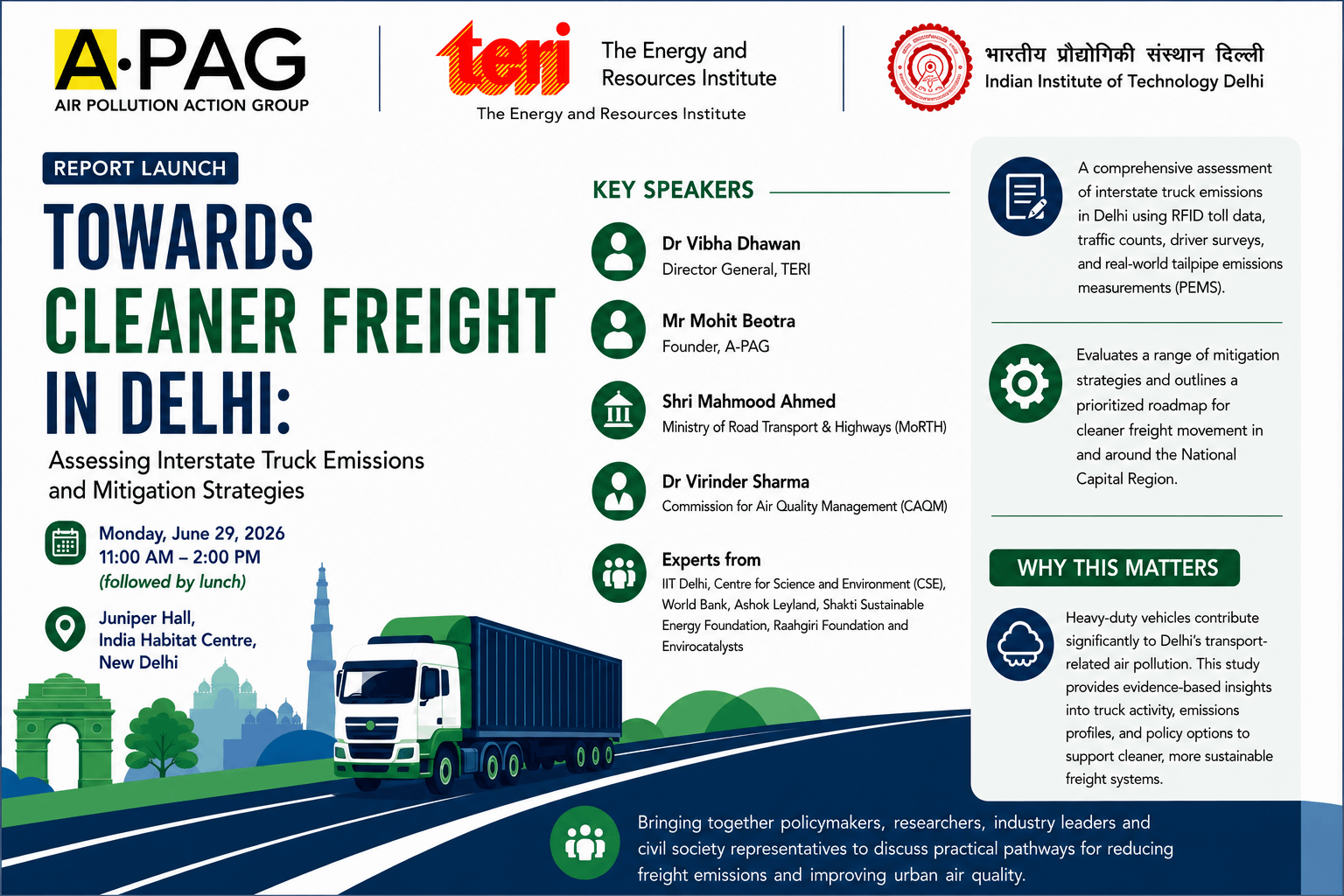
Air Pollution Action Group (A-PAG), in collaboration with The Energy and Resources Institute (TERI) and Indian Institute of Technology Delhi (IIT Delhi) will launch the report titled, Towards Cleaner Freight in Delhi: Assessing Interstate Truck Emissions and Mitigation Strategies.
NEW DELHI, June 27, 2026 /debcubspark.com-DigiTIMES./ — The Air Pollution Action Group (A-PAG), in collaboration with The Energy and Resources Institute (TERI) and the Indian Institute of Technology Delhi (IIT Delhi), will launch the report titled Towards Cleaner Freight in Delhi: Assessing Interstate Truck Emissions and Mitigation Strategies on Monday, June 29, 2026, at Juniper Hall, India Habitat Centre, New Delhi.
The launch event will feature key speakers, including Dr Vibha Dhawan, Director General, TERI; Mr Mohit Beotra, Founder, A-PAG; Shri Mahmood Ahmed, Ministry of Road Transport & Highways (MoRTH); Dr Virinder Sharma, Commission for Air Quality Management (CAQM); and experts from IIT Delhi, the Centre for Science and Environment (CSE), the World Bank, Ashok Leyland, Shakti Sustainable Energy Foundation, Raahgiri Foundation and Envirocatalysts.
The report presents one of the most comprehensive assessments of interstate truck emissions in Delhi, drawing upon official RFID (Radio Frequency Identification) toll data, traffic counts, driver surveys, and real-world tailpipe emissions measurements using an indigenously developed Portable Emissions Monitoring System (PEMS). The study also evaluates a range of mitigation strategies and outlines a prioritized roadmap for cleaner freight movement in and around the National Capital Region.
The event will bring together policymakers, researchers, industry leaders and civil society representatives to discuss practical pathways for reducing freight emissions and improving urban air quality.
Why This Matters
Heavy-duty vehicles contribute significantly to Delhi’s transport-related air pollution. However, real-world emissions data from interstate freight vehicles has remained limited. This study provides evidence-based insights into truck activity, emissions profiles and policy options that can help shape cleaner and more sustainable freight systems.